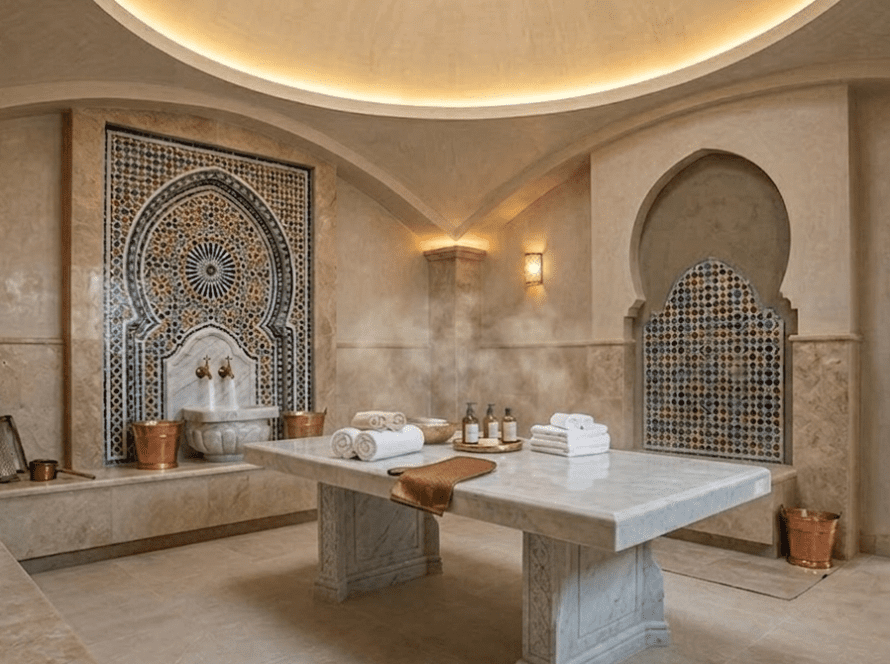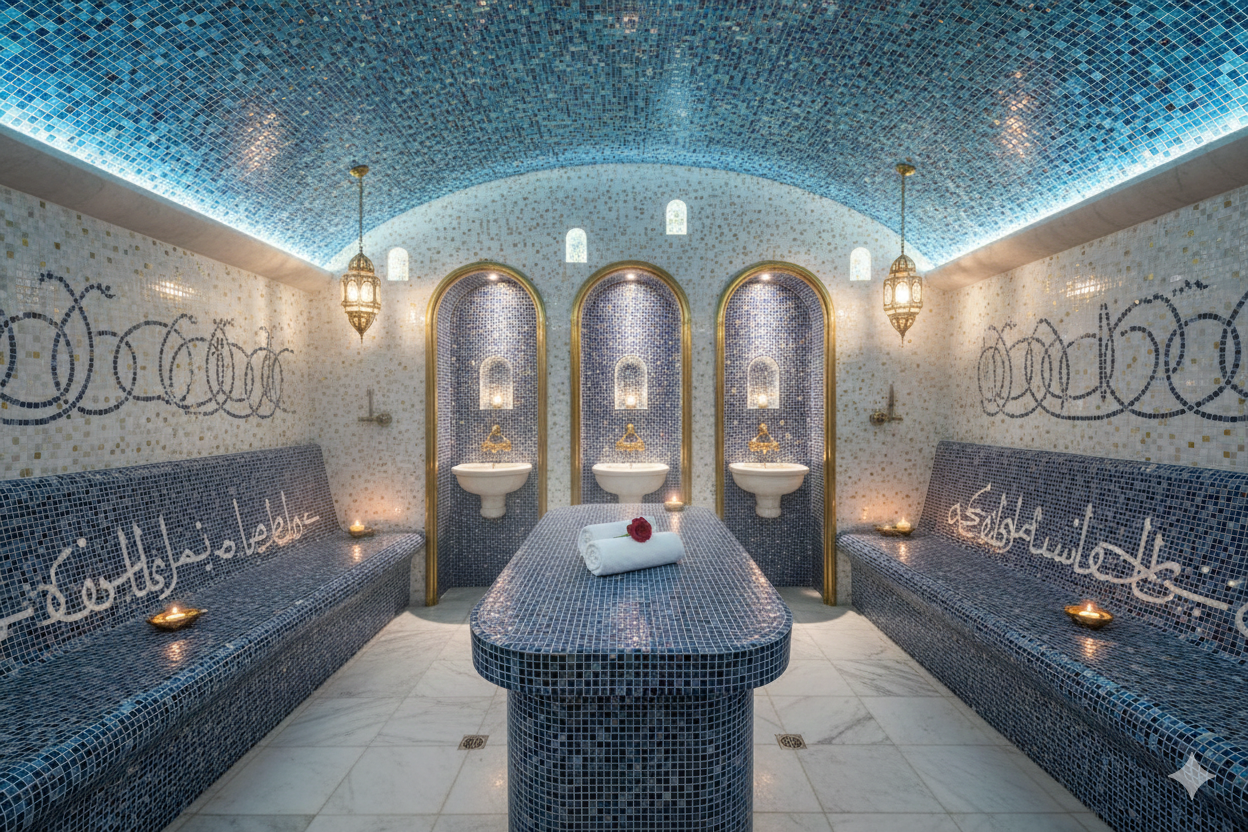
A traditional Moroccan hammam is more than a bathroom — it is a centuries-old ritual bathing space defined by layered heat, aromatic steam, mineral-rich plasters, and meditative calm. Installing one correctly, whether at home or in a commercial spa, demands the right combination of structural, mechanical, and decorative equipment.
Steam Generator — The Heart of the Hammam
The steam generator is the single most essential piece of equipment in any Moroccan hammam installation. It produces the continuous, moist heat — typically maintaining room temperatures between 40°C and 50°C (104°F–122°F) — that defines the hammam experience. Without correctly sized, properly installed steam generation, no other element of the hammam will perform as intended.
How to Size a Steam Generator
Steam generators are rated in kilowatts (kW). The general sizing rule is 1 kW per 1–1.5 m³ of room volume. Most residential hammam rooms sit between 6 m³ and 18 m³, requiring generators in the 4 kW to 12 kW range. Commercial spa hammams typically use generators from 12 kW to 36 kW or networked multiple units for large communal rooms.
Residential Steam Generator
Compact self-contained units for home hammam rooms up to 15 m³. Easy DIY plumbing connections. Auto-flush function.
Commercial Steam Generator
High-output units with stainless steel tanks, remote control panels, and multi-room distribution capabilities
Electric Underfloor Heating
Electric mat systems are more cost-effective to install and easier to retrofit in smaller residential spaces. They heat up faster than hydronic systems but are generally more expensive to run over time. Suitable for hammam rooms under 8 m².
- Thermostat controller: programmable, steam-rated, IP55 minimum
- Insulation boards: high-density polystyrene or PIR boards under the heating layer to prevent downward heat loss
- Screed overlay: flexible, waterproof-compatible screed rated for radiant heat systems
- Wall heating mats: low-profile electric mats applied behind tadelakt or tile finish
- Zone valves: for hydronic systems, to control temperature gradients between hot, warm, and cool zones
Heated Marble Slab & Benches (Hararat)
The central heated stone platform — known in Arabic as the hararat or navel stone — is the ceremonial and functional heart of the hammam. It is upon this raised, heated slab that body scrubs, soap massages, and clay mask treatments take place.
Authentic materials include Carrara marble, Moroccan limestone, travertine, and dark hammam marble. The slab must be thick enough (minimum 30 mm) to retain and radiate heat uniformly across its surface. Embedded hydronic tubing or electric heating elements are installed within the concrete substrate beneath the stone.
The Hararat — Sizing Guidelines
For a private home hammam, the central slab is typically 1.2 m × 2.0 m, raised 50–60 cm from the floor. Surrounding bench seating extends around the walls at a height of 45 cm. Commercial hammams may feature octagonal or hexagonal central slabs up to 2.5 m × 2.5 m. The stone must be sealed with a pH-neutral, steam-resistant sealer applied before and after installation.
Supporting Bench Construction
Raised perimeter benches are constructed from dense concrete blockwork (hollow-core blocks trap heat poorly — use solid), then covered with the chosen stone or tadelakt. Each bench tier must have embedded heating pipes or mats in the structural layer to provide consistent warmth for seated bathers.
Plumbing: Taps, Bowls & Drainage
Plumbing in an authentic Moroccan hammam uses traditional materials — hammered brass and copper — and a distinctive aesthetic of wall-mounted taps feeding large terracotta or copper tastes (bowls) used for scooping water. Modern hammam plumbing must balance traditional aesthetics with contemporary building codes and waterflow requirements.
Tadelakt Plaster & Zellige Tiles
The visual and tactile identity of a Moroccan hammam is defined by two surface finishes: tadelakt plaster on smooth walls and vaulted ceilings, and zellige mosaic tiles on lower wall sections, bench edges, and floor borders.
Tadelakt — Traditional Moroccan Lime Plaster
Tadelakt (tadeлкт) is a naturally waterproof, steam-resistant plaster made from hydrated lime quarried near Marrakech. It is mixed with water and pigment, applied in multiple layers, then polished with a smooth black river stone to a silky, marble-like finish. A final application of savon beldi (Moroccan black soap) seals the surface and enhances its water resistance.
Key materials in the tadelakt system include: Marrakchi lime powder, natural pigments (ochre, red iron oxide, black manganese), polishing stone, and savon beldi black soap.
Zellige Mosaic Tiles
Hand-cut from individually fired clay tiles, zellige creates the intricate geometric patterns — stars, interlocking diamonds, arabesques — that are synonymous with Moroccan architecture. For hammam installation, source tiles rated for wet environments with a minimum water absorption class of Ia (≤0.5%). Traditional zellige is sourced from Fès or Meknes; contemporary equivalents are available from specialist suppliers in Spain, France, and the UK.
Brass Wall-Mounted Taps
Antique-finish or hammered brass taps, typically with separate hot and cold feeds. Installed at bench height (approx. 80 cm from floor).
Copper or Terracotta Bowls (Tastes)
Traditional hand-beaten copper or hand-thrown terracotta bowls used to pour warm water over the body. Part of the cleansing ritual.
Linear Drainage Channel
Stainless steel or brass slot drains around the perimeter of the floor and beneath the central slab. Must be rated for continuous wet environments.
Drainage: All hammam drainage must incorporate an anti-siphon trap and a waterproof access panel for maintenance. The floor gradient should be a minimum of 1:60 towards the drains to prevent pooling on the heated slab or floor surfaces.
Lighting & Dome Design
Hammam lighting must create a meditative, atmospheric quality while meeting the strict IP ratings required for wet and steam-filled environments. Traditional Moroccan hammams used natural light filtered through small star-shaped skylights (qamariyas) in the dome — a feature that can be replicated with frosted glass domes or skylight inserts in a residential setting.
- IP65-rated LED downlights: fully sealed, steam-proof. Choose warm white (2700–3000K) for a traditional amber glow.
- Traditional Moroccan lanterns: pierced brass or copper pendant lanterns with IP44-rated fittings inside, creating star-patterned light projection. Used as focal accent lighting, not primary illumination.
- Fibre optic dome lighting: embedded fibre optic points in the ceiling dome simulate the traditional star skylight effect with zero heat emission — ideal for creating authentic ambience.
- Dimmable driver/control unit: all lighting circuits must be on dimmer circuits to allow the light level to be adjusted throughout the bathing ritual.
- Emergency egress lighting: required in commercial installations. IP65-rated maintained emergency LED units.
Traditional Hammam Accessories
Beyond the structural and mechanical equipment, a fully operational Moroccan hammam requires a curated set of traditional ritual accessories. These are used by the hammam attendant (kessal) or by bathers performing the ritual themselves.
Kessa Exfoliation Glove
Rough-woven viscose gloves used to scrub dead skin from the body after the steam-softening phase. Available in fine, medium, and coarse grades.
Savon Beldi (Black Soap)
Soft, gel-like soap made from olives and beldi oil. Applied before kessa scrubbing to soften skin and prepare for deep exfoliation.
Savon Beldi (Black Soap)
Soft, gel-like soap made from olives and beldi oil. Applied before kessa scrubbing to soften skin and prepare for deep exfoliation.
Argan Oil
Post-hammam moisturiser and finishing oil. Applied after rinsing to nourish and protect skin following the scrub and clay treatments.
Foam Bag (Kis)
Large muslin or linen bag used to lather savon beldi into a thick foam, then massaged across the entire body by the kessal.
Pumice Stone
Volcanic pumice used on heels and feet during the scrubbing ritual to remove hard skin. Traditional hammams keep a selection near the wash area.
Installation Step-by-Step
A professional Moroccan hammam installation follows a strict sequence. Each phase must be completed and inspected before the next begins.
Structural Assessment & Waterproofing
Assess floor load capacity for marble and stone. Apply full tanking membrane to all surfaces. Install vapour barrier and insulation boards.
Heating System Installation
Lay hydronic pipework or electric heating mats on insulation boards. Pour flexible screed overlay. Install wall heating mats and fix to substrate.
Steam Generator & Plumbing Rough-In
Mount and plumb the steam generator in an adjacent plant room or ventilated cupboard. Run hot and cold supplies to wall-mounted tap positions. Install drainage channels with correct floor gradients.
Marble Slab & Bench Construction
Build solid concrete blockwork benches with integrated heating. Set the central hararat slab on a concrete sub-base with embedded heating connections. Seal stone surfaces.
Wall & Ceiling Finishing
Apply tadelakt plaster in multiple coats to walls and domed ceiling. Polish with stone and seal with savon beldi. Install zellige tile borders and feature panels.
Electrical & Lighting
Install IP65-rated LED lighting on dimmable circuits. Fix Moroccan lanterns on IP44-rated fittings. Connect steam generator control panel and heating thermostats.
Final Plumbing, Accessories & Commissioning
Fit brass wall taps, copper bowls, and soap niches. Commission steam generator and heating systems. Test all drainage. Stock with hammam accessories and perform a full test bathing cycle.
The steam generator is the most critical piece of equipment in a Moroccan hammam. It produces the continuous, moist heat that defines the hammam experience. The generator must be correctly sized for the room’s cubic volume — typically 1 kW per 1–1.5 m³ — to maintain the ideal temperature of 40–50°C. No other element of the hammam will perform correctly without adequate steam generation.
Tadelakt is a traditional Moroccan lime-based plaster finish that is naturally waterproof and steam-resistant. It is applied in layers to walls and ceilings, then polished with a smooth stone and sealed with black soap (savon beldi). The result is a silky, marble-like surface that handles continuous humidity, repels water, and gives hammam walls their distinctive luminous appearance. Its breathability also prevents mould growth — a major advantage over synthetic waterproof paints.
Traditional Moroccan hammams use heated marble or limestone slabs for the central massage bench (hararat). Carrara marble, Moroccan black marble, and regional limestone are the most common choices. The stone must be at least 30 mm thick to retain and radiate heat evenly, and it must be sealed with a steam-resistant, pH-neutral sealer.
Tadelakt is a traditional Moroccan lime-based plaster finish that is naturally waterproof and steam-resistant. It is applied in layers to walls and ceilings, then polished with a smooth stone and sealed with black soap (savon beldi). The result is a silky, marble-like surface that handles continuous humidity, repels water, and gives hammam walls their distinctive luminous appearance. Its breathability also prevents mould growth — a major advantage over synthetic waterproof paints.