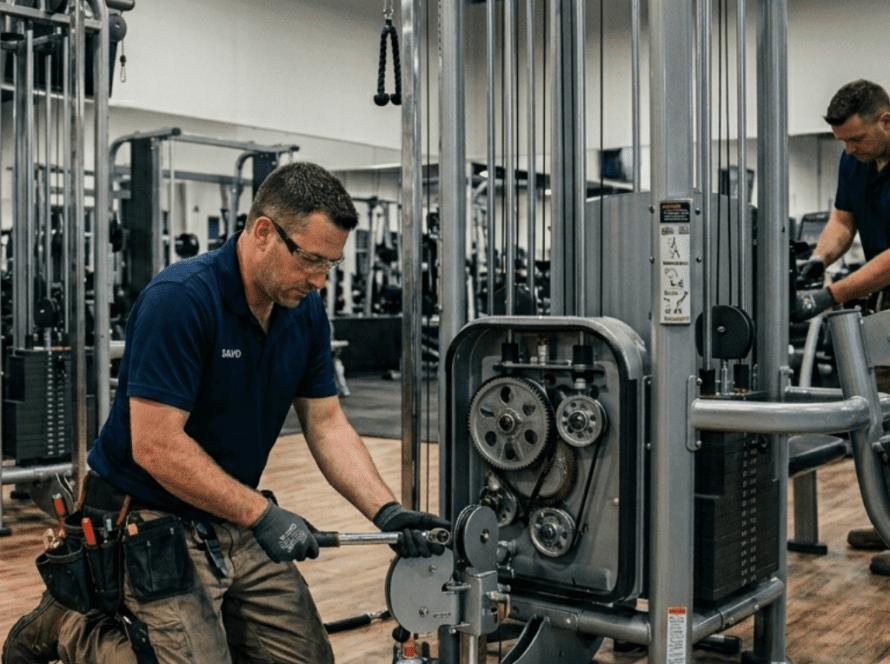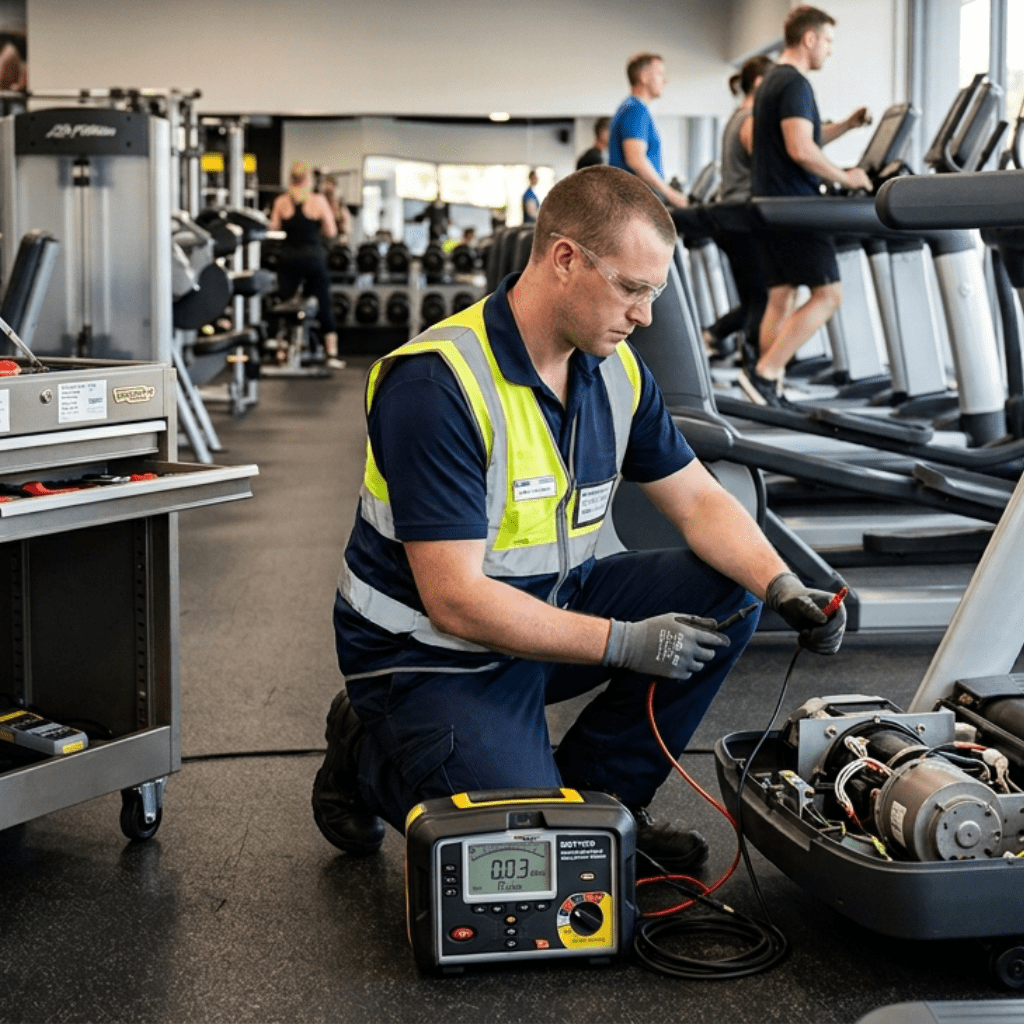
Why Electrical Safety Checks Matter in a Gym
Gyms run dozens of powered machines, treadmills, ellipticals, rowers, spin bikes, and entertainment consoles almost continuously, often for 12 to 18 hours a day. That constant use, combined with sweat, vibration, dust, and heavy foot traffic, makes gym equipment far more vulnerable to electrical wear than office or household appliances. Regular electrical safety checks for gym equipment are not optional extras; they’re a core part of facility risk management and, in most regions, a legal requirement under workplace health and safety law.
An undetected fault can lead to electric shock, equipment fires, sudden power loss mid-workout, or a treadmill belt stopping unexpectedly, any of which can cause serious injury to members. Insurers also increasingly require documented inspection records before paying out on liability claims, making a consistent testing schedule essential for both safety and legal protection.
GYM EQUIPMENT AT HIGHEST ELECTRICAL RISK
Not every machine carries the same risk profile. Equipment with motors, digital consoles, and moving parts requires closer and more frequent attention.
Treadmills
High motor load, constant vibration, and belt friction make treadmills the highest-risk machines in any gym. Internal wiring loosens over time, and dust builds around the motor housing.
Spin Bikes & Consoles
Digital consoles, USB charging ports, and Bluetooth modules add electrical complexity. Sweat ingress around buttons is a common cause of console failure.
Ellipticals & Steppers
Motorized incline and resistance systems draw heavy current. Cable routing near moving arms is prone to abrasion and insulation wear.
Powered Cable Machines
Motorized functional trainers and powered cable systems carry high torque loads. Overheating motors are the most common fault found during inspection.
Wall-Mounted Screens & AV
TVs, sound systems, and charging stations near water fountains or showers carry an elevated shock risk if cabling or sockets are exposed to moisture.
Extension Leads & Sockets
Often overlooked, multi-socket extension leads powering several machines are a leading cause of overload and overheating in gym floor layouts.
DAILY, MONTHLY & ANNUAL INSPECTION CHECKLIST
A layered inspection schedule combining frequent informal checks with periodic formal testing catches the widest range of faults before they become hazards.
Daily visual checks (staff-led)
- Inspect visible power cords for fraying, cuts, or exposed copper
- Check plugs and sockets for scorch marks or discoloration
- Confirm console displays power on without flickering or delay
- Listen for unusual buzzing, humming, or clicking sounds
- Verify emergency stop / safety key functions correctly
Monthly functional checks (trained staff or technician)
- Open accessible panels to inspect internal cable routing
- Check for dust accumulation around motors and power supplies
- Test all charging ports, USB outlets, and auxiliary connections
- Confirm circuit breakers and RCDs trip correctly on test
- Tighten any loose terminal connections found
Annual formal testing (qualified electrician)
- Full PAT (Portable Appliance Test) earth continuity & insulation resistance
- Load testing under normal operating conditions
- Fixed wiring inspection for hardwired equipment
- Updated PAT pass labels and compliance certificate issued
- Full results are logged in the facility’s maintenance register
HOW TO PERFORM AN ELECTRICAL SAFETY CHECK, STEP BY STEP
-
Visual Inspection of Cords and Plugs
Examine the full length of each power cord and the plug itself for fraying, cracking, discoloration, or exposed wiring before the equipment is used each day.
-
Check Earthing and Insulation
Confirm that the equipment is properly earthed and that the insulation is intact, ideally verified through a formal PAT test performed by a qualified electrical inspector.
-
Test Circuit Breakers and RCDs
Ensure residual current devices and circuit breakers trip correctly during a routine test button check to confirm shock protection is functioning.
-
Inspect Internal Wiring Housing
Periodically open accessible internal housings to check for dust buildup, loose terminal connections, or pest damage to insulation.
-
Log and Tag Every Inspection
Record the inspection date, attach a visible PAT pass label, and log the results in a centralized maintenance register for compliance evidence.
-
Remove and Report Faulty Equipment Immediately
Tag out, unplug, and physically remove any machine showing electrical warning signs from the gym floor until a qualified electrician resolves the fault.
WARNING SIGNS OF ELECTRICAL FAULTS IN GYM EQUIPMENT
Staff and members should be trained to recognize and immediately report the following warning signs:
-
Frayed or exposed wiring
Any visible copper wire or cracked cord insulation is an immediate shock and fire risk requiring instant removal from service.
-
Burning smell or scorch marks
A burning odor or discoloration near a plug or console indicates overheating components that can ignite without warning.
-
Flickering or unresponsive console
Intermittent display behavior often signals a failing power supply or loose internal connection rather than a simple software glitch.
-
Repeated circuit breaker trips
A machine that consistently trips its breaker is drawing abnormal current and should be isolated and inspected before reconnection.
-
Buzzing or humming sounds
Unusual electrical noise during operation often points to a loose connection or failing transformer inside the unit.
FREQUENTLY ASKED QUESTIONS (FAQ)
Commercial gym equipment should undergo a formal PAT (Portable Appliance Test) every 6 to 12 months, with daily visual checks and monthly functional checks performed by trained staff in between. High-use cardio equipment like treadmills may require more frequent inspection due to vibration and cable wear.
PAT (Portable Appliance Testing) is a formal electrical safety inspection that checks earthing, insulation resistance, and overall function of electrical equipment. For gyms, this applies to treadmills, ellipticals, spin bikes with consoles, and any plug-in-powered machine, confirming the equipment is safe to use and compliant with workplace electrical safety regulations.
Warning signs include frayed or exposed wiring, scorch marks or discoloration near plugs, a burning smell during operation, flickering display consoles, equipment that trips circuit breakers, unusual buzzing or humming noises, and visible damage to power cords or connectors. Any of these signs should result in immediate removal of the equipment from use.
Yes. Faulty electrical components in gym equipment can cause electric shock, burns, fire, and equipment malfunction during use, which may lead to falls or impact injuries. Regular electrical safety checks for gym significantly reduce these risks and are a legal requirement in most commercial fitness facilities.
Under most workplace safety regulations, the gym owner or facility manager holds legal responsibility for ensuring electrical safety, though daily checks can be delegated to trained staff. Formal PAT testing must be performed by a qualified, competent electrical inspector.
CONCLUSION: BUILD A CULTURE OF ELECTRICAL SAFETY
Effective electrical safety checks for gym equipment aren’t a once-a-year box to tick; they’re a layered system of daily vigilance, monthly diligence, and annual professional testing. Treadmills, cable machines, and consoles take a daily beating from sweat, vibration, and heavy use, so the small habit of checking a cord before flipping the power switch can prevent a serious incident down the line.
Build a simple, repeatable checklist, train every staff member to spot the warning signs, and keep your PAT testing schedule on a calendar nobody can ignore. The result is a safer gym floor, lower liability exposure, and members who can trust the equipment under their hands and feet.