What Is a Glass Steam Room – Why the UAE Wellness Market Has Embraced It
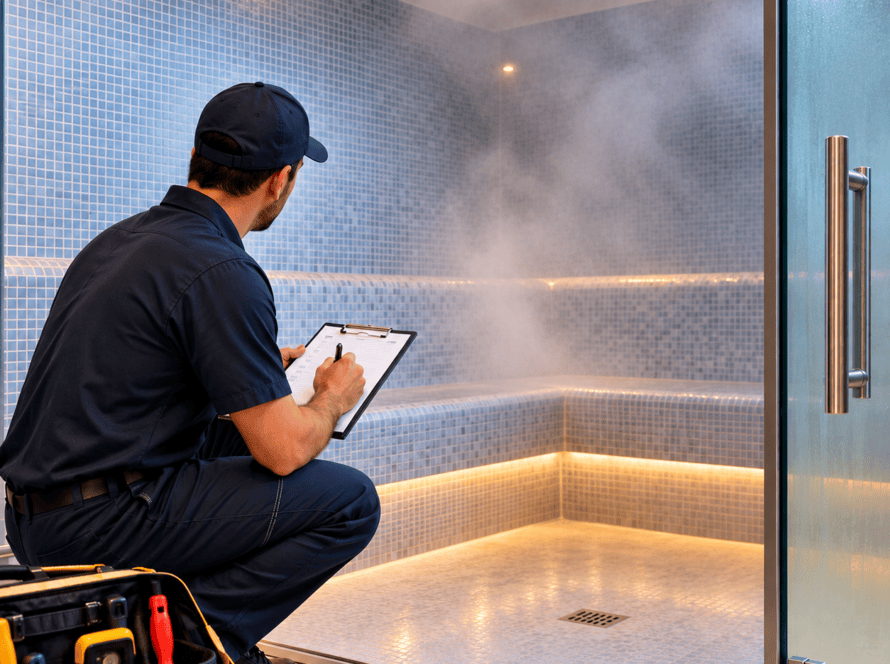
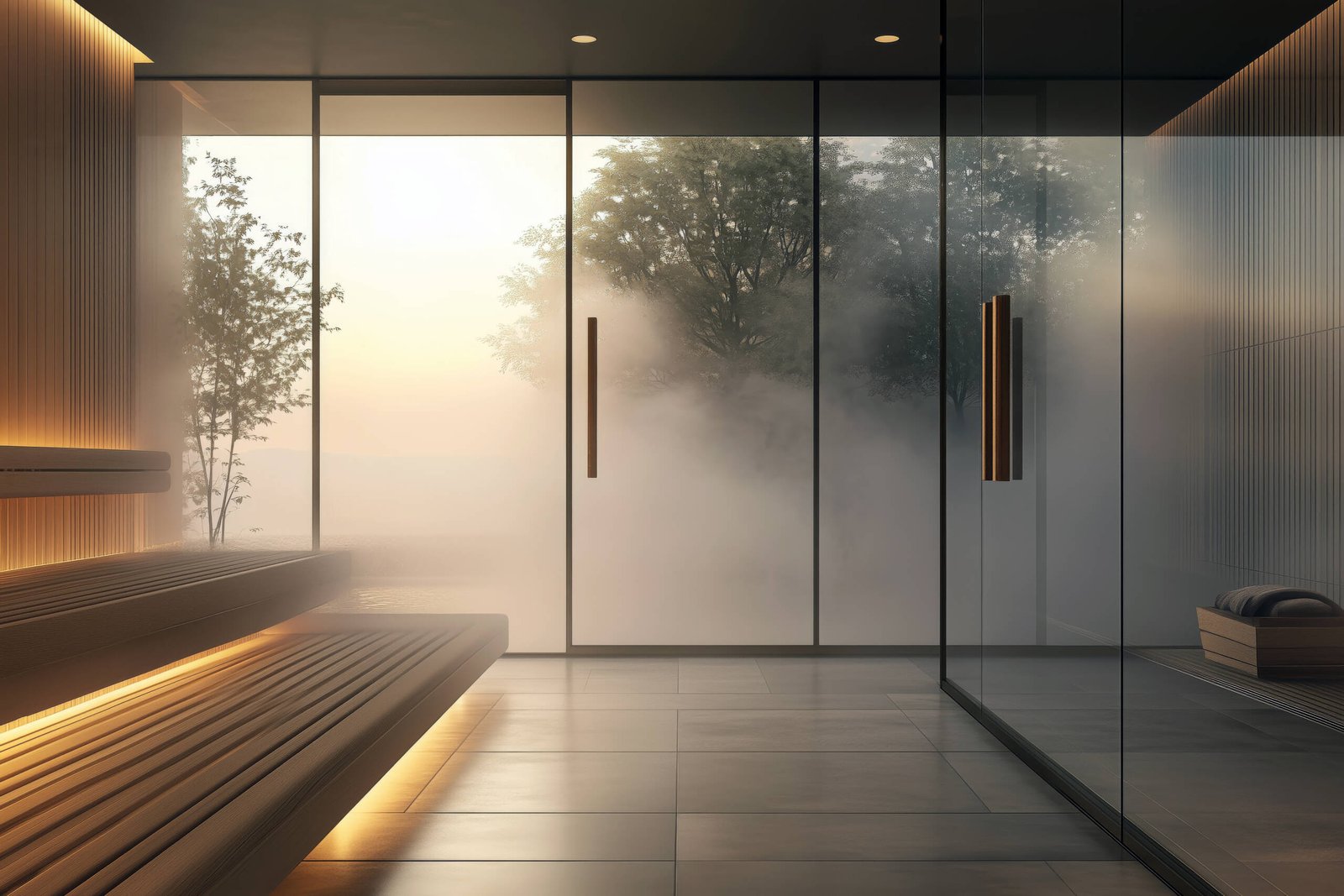
A glass steam room replaces the solid tiled or panel walls of a traditional steam enclosure with tempered or laminated glass panels on one or more faces, creating a visually open wellness space. In a full glass steam room, all four walls and the ceiling are glass; in a partial or semi-glass configuration, typically the front wall and door are glass with tiled side and rear walls. Either configuration fundamentally changes the character of the space from an enclosed, cave-like chamber to a light-filled, architecturally transparent wellness installation.
In the UAE market, where hotel spas, private villas, luxury health clubs and wellness centres compete intensely on design and guest experience the glass steam room has become the preferred specification for premium installations. Architects and interior designers working on Dubai hotels and Abu Dhabi resort projects specify glass steam rooms for three reasons: they photograph exceptionally well for marketing material; they read as contemporary and premium to a guest who has experienced tiled steam rooms at budget properties; and they create a visual connection between the steam room and its surrounding spa environment that reinforces the overall design concept of the space.
Glass Steam Room Benefits — Health, Design and Commercial Advantages for UAE Properties
Premium Aesthetic and Perceived Value
A glass steam room signals luxury to a guest in a way that tiled walls simply do not. In Dubai hotel spa benchmarking, glass-enclosed steam rooms consistently score higher on perceived quality and cleanliness in guest satisfaction surveys, even when the underlying steam experience is identical. For DTCM-classified hotels competing at 5-star level, glass steam room specification contributes to the visual quality markers that assessors evaluate.
Visual Spaciousness and Natural Light
Glass does not visually terminate a space. A glass steam room within a spa environment reads as part of the overall wellness space rather than a separate enclosed chamber making both the steam room and the surrounding area feel larger. In UAE hotel and villa spa designs where the steam room is adjacent to a relaxation lounge or pool terrace, glass creates a visual flow between spaces that is impossible with solid walls.
Non-Porous Surface — Hygienic by Design
Tempered glass is entirely non-porous it does not absorb moisture, body residue or the organic material that mold and biofilm feed on. Unlike cement-based tiled walls with porous grout lines, glass walls offer no substrate for mold colonisation when properly maintained. This makes glass steam rooms intrinsically more hygienic than tiled equivalents and significantly easier to clean to the standard required by Dubai Municipality and DHA wellness facility inspections.
Full Therapeutic Steam Benefits
The glass enclosure does not alter the steam environment guests receive the full therapeutic benefits of steam bathing regardless of wall material. These include respiratory benefit from warm, humidified air; deep muscle relaxation from heat penetration; skin hydration from steam condensate; and the cardiovascular conditioning effect of sustained heat exposure. In UAE’s dry desert climate, the humidity of a steam room provides a pronounced skin hydration benefit that is experienced as particularly restorative.
Marketing and Social Media Value
A glass steam room is inherently photogenic the contrast of steam visibility, interior lighting effects (chromotherapy, back-lit glass, LED accents) and the transparency of the enclosure creates compelling images for hotel marketing material, Instagram content and review platform photography. UAE hospitality properties invest significantly in Instagram-worthy spa spaces, and a well-designed glass steam room consistently generates organic guest photography that serves as unpaid marketing.
Design Flexibility and Customisation
Glass steam rooms offer design options that tiled rooms cannot: back-painted glass in any RAL colour to match a brand palette; digitally printed glass with custom patterns, textures or artwork; frosted or etched privacy glass for areas where full transparency is not desired; and smart switchable glass (electrochromic) that transitions from transparent to opaque at the touch of a button. These options make glass steam rooms highly adaptable to hotel brand identities and villa interior design concepts.
Six Glass Steam Room Design Ideas for UAE Hotels, Villas and Spas
Full Frameless Glass Enclosure
All four walls and the ceiling in 12mm clear tempered glass, with frameless structural glass-to-glass joints using silicone only, with no visible metal frame. The result is a floating, near-invisible enclosure that reads as pure architectural space. Particularly effective in UAE hotel spa designs built around a neutral material palette (white marble, pale stone, natural timber). Interior fittings bench, steam nozzle, chromotherapy lighting are the only visible elements.
Coloured Back-Painted Glass Walls
Tempered glass panels with a factory-applied solid colour coating on the rear face, visible through the glass as a deep, high-gloss colour. Popular in UAE luxury hotel spa refurbishments where a brand colour needs to dominate the steam room interior. Deep forest greens, soft terracottas, midnight blues and warm golds all work well in this application. The glass surface facing guests is still clear, tempered, easy to clean, and visually seamless.
Glass Front, Stone or Tile Surround
A glass front wall and door with tiled or natural stone side and rear walls the most common commercial glass steam room configuration in UAE hotels. The glass face provides the visual openness and premium positioning that guests experience on entry and from the relaxation area; the tiled surround provides the thermal mass and familiar steam room character inside. Cost-effective and practically proven in UAE’s hotel gym and spa environment.
Digitally Printed or Etched Glass Panels
Digitally printed ceramic frit patterns fired into the glass surface during tempering permanent, fade-resistant, and rated for steam room temperatures and chemical cleaning. Used in UAE spa designs to introduce botanical patterns, geometric mashrabiya motifs or abstract textures into the glass walls. Etched glass (sandblasted or acid-etched) provides a translucent privacy effect while retaining the glass material appropriate for mixed-use wellness spaces where partial privacy is required.
Integrated LED Chromotherapy Behind Glass
LED chromotherapy panels mounted behind back-painted or frosted glass panels, creating a colour-washing effect on the interior surfaces. Colour changes controlled by a digital wellness programme from outside the steam room. A significant design differentiator for UAE luxury resort spas chromotherapy steam programmes are marketed as specific wellness treatments and justify a premium service charge. Glass is ideal for this application because it transmits light in a way that tiles cannot.
Electrochromic or PDLC Smart Glass
Smart switchable glass transitions between transparent and opaque (privacy) at the touch of a button a PDLC film laminated between two glass panels responds to an electrical signal. In UAE hotel spa environments, switchable glass allows a steam room to be transparent during display or unoccupied periods and opaque during guest use. A premium specification for five-star and ultra-luxury properties where the technology justifies the cost premium (typically 4–6× the cost of standard tempered glass).
Glass Types for UAE Steam Rooms — How to Specify Correctly
Specifying the wrong glass type for a UAE steam room is a costly mistake — glass that is not tempered to the correct standard, not thick enough or not properly heat-soaked can fail under steam room thermal cycling, creating a safety hazard and a replacement cost. The table below covers the correct specification for every glass application in a UAE steam room.
| GLASS TYPE | APPLICATION | MINIMUM SPEC (UAE) | RECOMMENDATION |
|---|---|---|---|
| Toughened / Tempered (monolithic) | Walls, door, ceiling panels | 10mm, heat-soaked tempered (EN 12150 or equivalent) | 12mm for panels over 1.2m height; heat soaking eliminates nickel sulphide inclusion risk essential for overhead panels |
| Laminated tempered | Overhead glass (ceiling); any panel where glass-fall risk must be eliminated | 10mm tempered + 1.52mm PVB interlayer + 10mm tempered (21.52mm total) | Mandatory for ceiling applications in event of fracture, laminate holds glass in place. In UAE, specify PVB interlayer rated for wet areas and 60°C continuous temperature |
| Back-painted glass | Colour wall panels | 10mm tempered, ceramic paint system — not organic lacquer | Specify ceramic-based paint systems rated for steam room temperatures; organic lacquers delaminate in continuous high-humidity environments within 12–24 months |
| Frosted / etched glass | Privacy panels, door panels | 10mm acid-etched or sandblasted tempered | Frosted surfaces trap mineral scale faster than clear glass in UAE hard water requires daily cleaning attention; consider anti-scale coating on frosted panels |
| PDLC / electrochromic smart glass | Switchable privacy panels | Manufacturer-rated for 60°C continuous and 100% RH; verify UAE power supply compatibility (220V/50Hz) | Request manufacturer test certification for steam room temperature cycling not all smart glass products are steam-room-rated; failure at the laminate edge is the common fault mode |
| Digitally printed frit glass | Decorative wall panels | Ceramic frit printing fired during tempering, not applied post-temper | Ceramic frit fired during tempering is permanent and fully resistant to steam, humidity, and cleaning chemicals. Post-temper applied prints are not they will degrade in UAE steam room conditions |
Steam rooms require tempered (toughened) safety glass: standard float glass or annealed glass must never be used. Tempered glass is produced by heating float glass to approximately 620°C and then rapidly cooling it, which introduces compressive stress that makes it approximately 4–5 times stronger than standard glass and causes it to fracture into small, blunt cubes rather than large sharp shards in the event of breakage. For UAE steam rooms, the minimum specification is 10mm heat-soaked tempered glass for wall panels and 12mm for full-height frameless panels over 1.2m. For ceiling glass, laminated tempered glass (two layers of tempered glass bonded with a PVB interlayer) is required so that in the event of fracture, the glass remains in place held by the interlayer rather than falling onto occupants. Heat soaking,a secondary quality test that holds tempered glass at 290°C for several hours to trigger any nickel sulphide inclusions before installation is strongly recommended for overhead glass in UAE steam rooms. All glass should be supplied with a toughening certificate.
Steam rooms require tempered (toughened) safety glass standard float glass or annealed glass must never be used. Tempered glass is produced by heating float glass to approximately 620°C and then rapidly cooling it, which introduces compressive stress that makes it approximately 4–5 times stronger than standard glass and causes it to fracture into small, blunt cubes rather than large sharp shards in the event of breakage. For UAE steam rooms, the minimum specification is 10mm heat-soaked tempered glass for wall panels and 12mm for full-height frameless panels over 1.2m. For ceiling glass, laminated tempered glass (two layers of tempered glass bonded with a PVB interlayer) is required so that in the event of fracture, the glass remains in place held by the interlayer rather than falling onto occupants. Heat soaking — a secondary quality test that holds tempered glass at 290°C for several hours to trigger any nickel sulphide inclusions before installation is strongly recommended for overhead glass in UAE steam rooms. All glass should be supplied with a toughening certificate.
A correctly specified and well-maintained glass steam room in a UAE hotel or villa should last 15–25 years before major glass panel replacement is required. The primary factors that shorten service life are: mineral scale etching — years of repeated acid descaling slowly micro-etch the glass surface, reducing clarity and increasing the adhesion of subsequent scale deposits; this is significantly mitigated by daily squeegeeing, a hydrophobic coating programme and RO water treatment; silicone joint degradation silicone joints in a steam room require replacement every 3–7 years depending on the product specified and the cleaning chemicals used; using anti-fungal-rated silicone and avoiding bleach extends joint life significantly; and glass edge damage — chips and cracks in glass edges, typically caused by impact from dropped accessories or cleaning equipment, can propagate under thermal cycling and necessitate panel replacement; edge protection during cleaning and clear guest instruction to avoid placing hard objects directly on glass edges helps prevent this. Steam generators are the component most likely to require major work before the glass does — with UAE hard water and no treatment, generator elements typically require replacement every 2–4 years; with RO treatment, 5–8+ years. A 15-year maintenance cost model for a UAE hotel glass steam room including cleaning products, silicone replacement cycles, glass coating programme, generator PPM and one generator element replacement