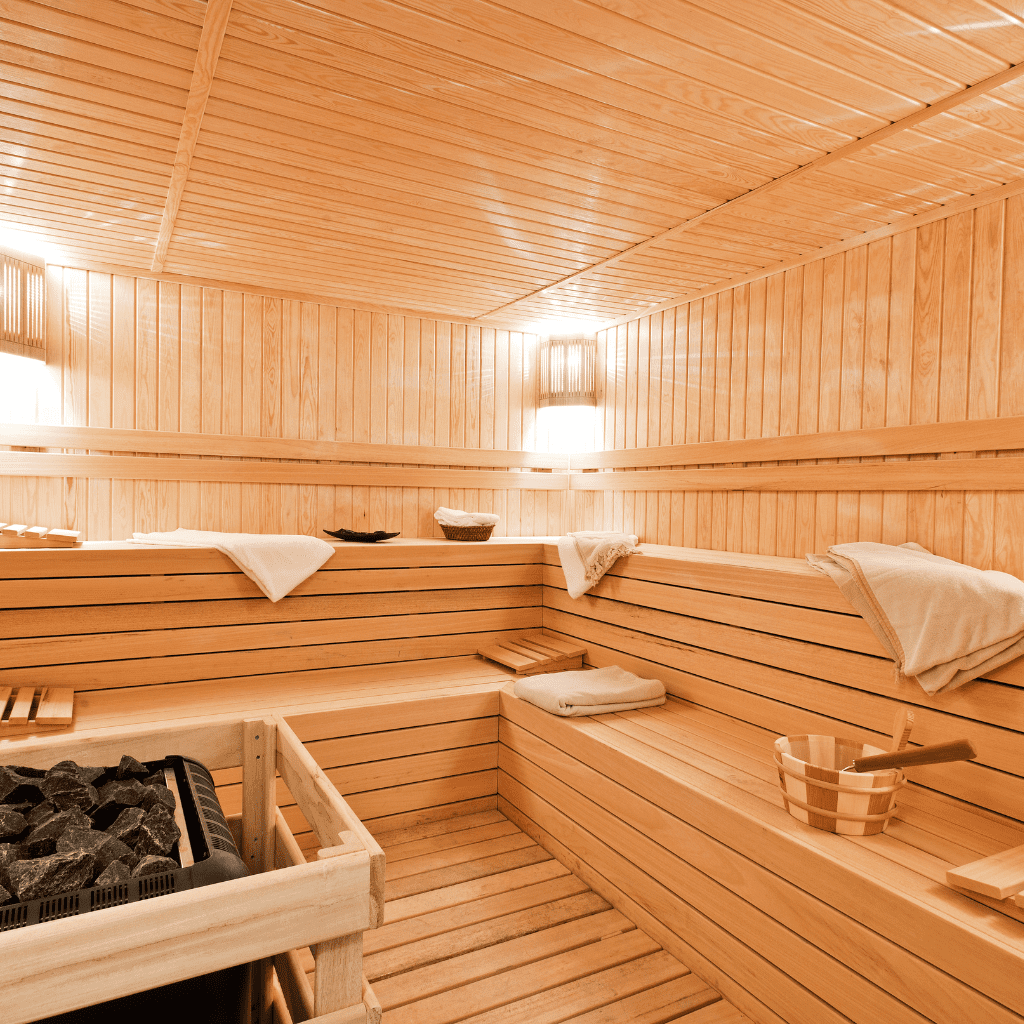
Indoor sauna installation: where to put the indoor sauna
Whether you’re converting a basement, carving space out of a master bathroom, repurposing a spare bedroom, or transforming a garage, the fundamentals of indoor sauna installation remain consistent: you need adequate floor space, the right electrical supply, a well-designed ventilation system, and moisture-resistant materials.
This comprehensive indoor sauna placement guide walks you through every major location option — comparing the pros, cons, and critical technical requirements for each — so you can make a confident, well-informed decision before spending a single dollar on materials or labour.
01.Why Indoor Sauna Placement Matters
Location is not just a matter of convenience — it directly determines your sauna’s thermal efficiency, structural longevity, maintenance burden, and safety. A poorly positioned home sauna can lead to:
- Poor heat retention from inadequate insulation
- Mould and rot from trapped post-session humidity
- Electrical hazards from incorrect circuit sizing
- Water damage to adjacent floors and wall cavities
- Structural degradation from persistent moisture
- Voided manufacturer warranties and insurance claims
- Failed building inspections at time of resale
- High energy bills from inefficient heat retention
Conversely, a properly placed and installed sauna — with the right preparation — delivers reliable performance for 20–30 years, requires minimal maintenance, and adds genuine value to your property. Studies from the Finnish Sauna Society and various real estate surveys consistently show that a quality home sauna adds 3–5% to a home’s appraised value in markets where wellness amenities are valued.
02.Best Locations for Your Indoor Sauna
The six most popular indoor sauna installation locations each carry distinct advantages and challenges. Your ideal choice depends on available space, your home’s existing infrastructure, and your renovation budget.
Natural earth insulation, ample space, easy panel access, and full privacy make this the top choice for most homeowners. Moisture management is the primary challenge.
Best Overall
Plumbing and drainage already in place. Ideal for compact pre-built kits. The sauna-to-shower transition is seamless. Requires significant floor space and upgraded ventilation.
Most Convenient
Full room conversion gives maximum size flexibility. Requires new ventilation, electrical work, moisture barriers, and a floor drain — but delivers a dedicated wellness sanctuary.
Great Option
Excellent for large custom builds. Insulation upgrades are essential. Easy electrical access. Works best with a dedicated HVAC strategy to isolate sauna heat from the garage environment.
Good with Prep
A natural pairing for post-workout recovery. Many gyms have concrete floors and drainage already. The sauna-and-cool-down routine fits seamlessly into a recovery-first workout layout.
Situational
Purpose-built sauna room addition — complete control over dimensions, orientation, and finishes. The most expensive option, but delivers an entirely tailored, premium result.
Premium Choice
Basement Sauna: The Gold Standard
Basements remain the most popular location for indoor home sauna installation, and for good reason. The surrounding soil provides passive insulation that dramatically reduces the energy required to bring the sauna up to operating temperature (typically 70–100°C / 160–212°F). Electrical panel access is usually short and direct, minimising wiring costs. The lower level also keeps heat and humidity naturally isolated from your main living areas.
The primary challenge is moisture control. Before breaking ground on a basement sauna project, ensure the space has a properly installed vapour barrier on all concrete surfaces, a functional floor drain or drainage system within 3 feet of the sauna door, and adequate dehumidification. Unaddressed moisture is the single most common cause of premature deterioration of sauna wood.
Bathroom Sauna: The Seamless Upgrade
Installing a sauna in a large master bathroom is increasingly popular for good reason — the traditional Finnish sauna ritual of heat followed by a cold shower or plunge is effortlessly achievable when both are in the same room. Drainage is already present, plumbing is adjacent, and the design aesthetic of a luxury spa bathroom naturally accommodates a sauna enclosure.
The critical requirements for a bathroom sauna are: a minimum of 35–50 additional square feet of floor space, a dedicated 240V GFCI-protected circuit completely separate from the bathroom’s existing electrical circuits, a high-capacity exhaust fan rated for 150+ CFM and ducted directly to the exterior (not recirculated), and a waterproof membrane beneath all flooring within the sauna enclosure.
03.Indoor Sauna Room Requirements at a Glance
Regardless of which location you select, every indoor sauna installation must meet the following minimum specifications. Use this table as your quick-reference benchmark before committing to a room.
| Requirement | Minimum Standard | Recommended | Notes |
|---|---|---|---|
| Floor Space — 1 person | 4 × 4 ft (1.2 × 1.2 m) | 4 × 6 ft (1.2 × 1.8 m) | Compact but functional |
| Floor Space — 2–3 people | 5 × 6 ft (1.5 × 1.8 m) | 5 × 8 ft or larger | Allows two-tier bench layout |
| Ceiling Height | 6.5 ft (2.0 m) | 7 ft (2.1 m) | Max 7 ft for heat efficiency |
| Electrical Circuit | 240V / 30A dedicated | 240V / 40–60A dedicated | Always hire a licensed electrician |
| Heater Clearance | 6 in (15 cm) from surfaces | 12 in (30 cm) | Check manufacturer specs |
| Intake Vent Position | 6 in above floor, near heater | 8 in above floor, adjustable | Min 20 sq in opening area |
| Exhaust Vent Position | 6 in below ceiling, opposite wall | Direct exterior duct | Never recirculate into building |
| Door Width | 24 in (61 cm) | 28–30 in (71–76 cm) | Door must open outward only |
| Wall Insulation | R-11 (fiberglass batt) | R-13 or rigid foam | Aluminium foil vapour barrier required |
| Ceiling Insulation | R-19 | R-30 | Heat rises — ceiling is critical |
04. Sauna Electrical Requirements: What You Must Know
Electrical installation is the most safety-critical aspect of any indoor sauna project. Getting it wrong creates fire and electrocution risks. Getting it right ensures your sauna operates efficiently and safely for decades.
Most residential sauna heaters require a dedicated 240-volt circuit with a 40–60 amp breaker. The specific amperage is determined by the heater’s kilowatt output:
- 4.5 kW heater → 30A breaker (1-person sauna)
- 6 kW heater → 40A breaker (2-person sauna)
- 8 kW heater → 50A breaker (3–4 person sauna)
- 9 kW heater → 60A breaker (4–6 person sauna)
- A separate disconnect switch must be within sight of heater
- All wiring must comply with NEC and local amendments
- An electrical permit is required in virtually all jurisdictions
- GFCI protection required in bathrooms and wet locations
05.Ventilation & Flooring: The Two Most Overlooked Requirements
Sauna Ventilation: Cross-Flow Is Non-Negotiable
Ventilation protects both the users of your sauna and the structure of your home. The correct system is a two-vent cross-flow design — one intake vent positioned low near the heater (6–8 inches above the floor), and one exhaust vent positioned high on the opposite wall (6 inches below the ceiling). This creates a convective cycle: cool air enters, is heated, rises, circulates, and exits through the exhaust, continuously refreshing the air volume.
The exhaust duct should connect to an exterior vent, not recirculate into adjacent wall cavities or other rooms. After every sauna session, leave the door open and run exhaust ventilation for a minimum of 30–60 minutes. This post-session ventilation step is the single most important maintenance habit for preserving your sauna’s wood interior and preventing mould formation.
Flooring for Indoor Sauna Rooms
The floor inside your sauna and the floor of the surrounding room both require specific materials. Inside the sauna, the surface must be slip-resistant when wet, tolerant of extreme heat cycles, and easy to sanitize. The best options are:
- Porcelain tile (most durable, easiest to clean)
- Natural slate or travertine (excellent thermal stability)
- Teak or cedar wood deck with drainage gaps
- Sealed concrete with anti-slip coating
- High-humidity rated luxury vinyl plank (LVP)
- Avoid: carpet, laminate, standard hardwood
- Avoid: cork, bamboo — swells with moisture
- Waterproof membrane under all floor materials
Outside the sauna — in the adjacent room — install a waterproof membrane under your chosen floor covering to protect the subfloor from any moisture that migrates through the sauna door during use or ventilation. In basements, a floor drain within 3 feet of the sauna entry is strongly recommended for post-session cleaning and accident protection.
06.Complete Pre-Installation Checklist
Work through every item on this checklist before ordering your sauna kit or booking your contractor. Addressing each point in advance prevents delays, permit rejections, and expensive rework.
- Measure minimum floor space and ceiling height in the chosen room
- Verify the main electrical panel has spare capacity for a 240V circuit
- Get three quotes from licensed electricians for wiring and disconnect
- Contact local building authority — confirm permit requirements
- Inspect chosen room for moisture, staining, or water intrusion
- Plan intake and exhaust vent routing to exterior of building
- Select interior wood species: cedar, hemlock, or basswood
- Choose heater type: traditional electric, wood-burning, or infrared
- Determine bench layout: L-shape, two-tier, wall-to-wall
- Install or confirm moisture-resistant flooring with drain access
- Plan waterproof membrane installation under and adjacent to the sauna
- Confirm sauna door swings outward (mandatory safety requirement)
- Source correct insulation (R-13 walls, R-30 ceiling) with foil vapor barrier
- Measure doorway and corridors for sauna kit delivery access
- Review manufacturer installation requirements to protect the warranty
- Schedule electrical rough-in inspection before drywalling
Frequently Asked Questions
The minimum floor area for a single-person indoor sauna is 4 × 4 feet (1.2 × 1.2 metres). While functional, most homeowners find a 4 × 6 ft sauna significantly more comfortable for regular use. For two people, plan for at least 4 × 6 ft; for three or more people, 5 × 7 ft or larger. Ceiling height should be no higher than 7 feet (2.1 m) — higher ceilings waste energy by increasing the air volume the heater must warm before bench-level temperatures become therapeutic.
Yes — a master bathroom is one of the most practical and popular locations for a home sauna. Plumbing, drainage, and existing waterproofing are already present. However, you must meet specific requirements: at least 35–50 additional square feet of floor space, a dedicated 240V GFCI-protected circuit separate from the bathroom’s existing wiring, a high-capacity exhaust fan (150+ CFM) ducted directly to the exterior, and moisture-resistant flooring such as porcelain tile or sealed concrete beneath the entire sauna enclosure.
Most home sauna heaters require a dedicated 240-volt circuit with a 40–60 amp breaker installed by a licensed electrician. The exact amperage depends on heater output: 4.5 kW heaters need a 30A breaker; 6 kW heaters need 40A; 8–9 kW heaters need 50–60A. A separate disconnect switch must be mounted within line-of-sight of the heater. All wiring must comply with the National Electrical Code (NEC) and local amendments. Never attempt to wire a sauna yourself — it is a fire and electrocution risk that will void your homeowner’s insurance.
A basement is widely regarded as the best overall location for a home sauna. The surrounding earth provides passive insulation that reduces heat-up times and energy costs. Basements typically offer the most available floor space, easy access to the main electrical panel, and natural isolation of heat and humidity from main living areas. The primary challenges are moisture control and ceiling height — inspect for water intrusion, install a vapour barrier on all concrete surfaces, ensure a floor drain is nearby, and confirm a minimum ceiling height of 7 feet before proceeding.
Conclusion: Choosing the Right Spot for Your Indoor Sauna
The perfect indoor sauna placement is the intersection of available space, your home’s existing infrastructure, and compliance with the technical requirements for safe, efficient operation. For most homeowners, a basement sauna delivers the best combination of thermal efficiency, available floor space, and installation flexibility. A master bathroom sauna wins on lifestyle convenience. A spare room conversion gives the most customisable and visually striking result.
Whatever location you choose, the non-negotiables are always the same: a properly sized dedicated electrical circuit installed by a licensed electrician, a working two-vent cross-flow ventilation system ducted to the exterior, moisture-resistant flooring with a waterproof membrane, appropriate insulation values, and all required building and electrical permits obtained in advance.
Plan carefully, hire licensed professionals for electrical and structural work, and your home sauna will deliver decades of health benefits, genuine relaxation, and measurable property value — making it one of the most rewarding home improvements you can invest in.