Why Gym Flooring Maintenance Is Critical for UAE Fitness Facilities
Gym flooring maintenance is not housekeeping it is a structural asset management responsibility. The floor of a commercial gym is a high-load, high-wear surface that directly affects three critical facility outcomes: user safety (worn, lifted or contaminated flooring is one of the leading causes of gym user injury in commercial facilities a torn rubber tile edge, a cupped hardwood plank or a slippery vinyl surface can result in serious injury and legal liability for the operator); equipment longevity (gym equipment placed on deteriorating flooring cracked rubber, unlevel tiles, soft foam is subject to abnormal vibration and load distribution that accelerates bearing and frame wear); and regulatory compliance (Dubai Municipality and DTCM assessments of commercial gym and hotel fitness facilities evaluate floor condition as part of safety and quality scoring a facility with visibly degraded flooring fails inspection).
In the UAE, gym flooring faces accelerating stress factors not present in European or North American comparator markets: year-round operation with no seasonal closure means there is no natural maintenance window; sand and dust ingress from the UAE desert environment introduces abrasive grit into gym floor surfaces that accelerates surface wear and embeds into rubber pores; ambient heat causes rubber tiles and adhesive bonds to harden and become brittle faster than in temperate climates; and humidity differentials between air-conditioned gym interiors and UAE exterior conditions cause moisture cycling in hardwood and vinyl surfaces that accelerates cupping and joint failure.
The Six Gym Floor Types in UAE Facilities — Maintenance Overview
Vulcanised Rubber Tiles and Rolls
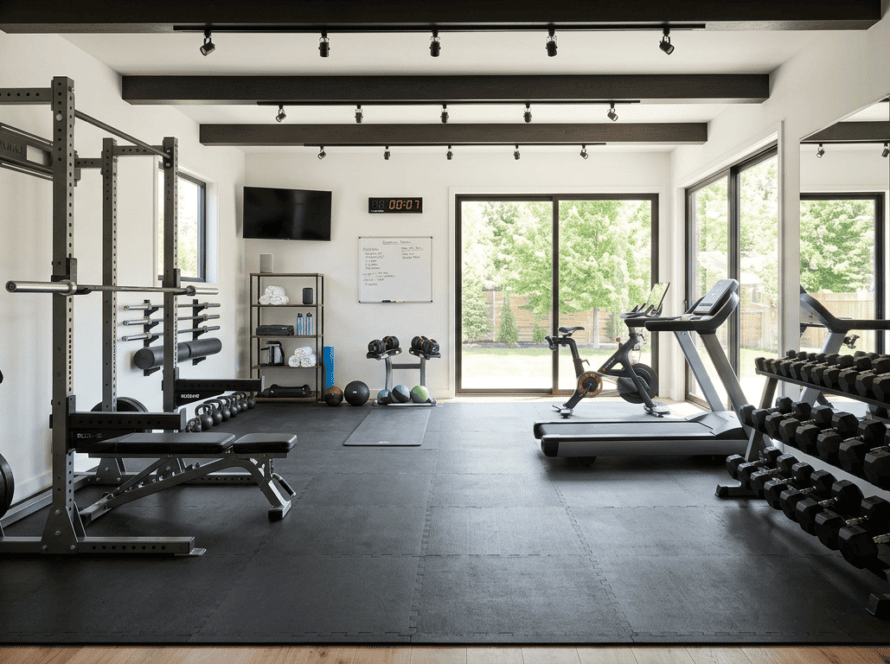
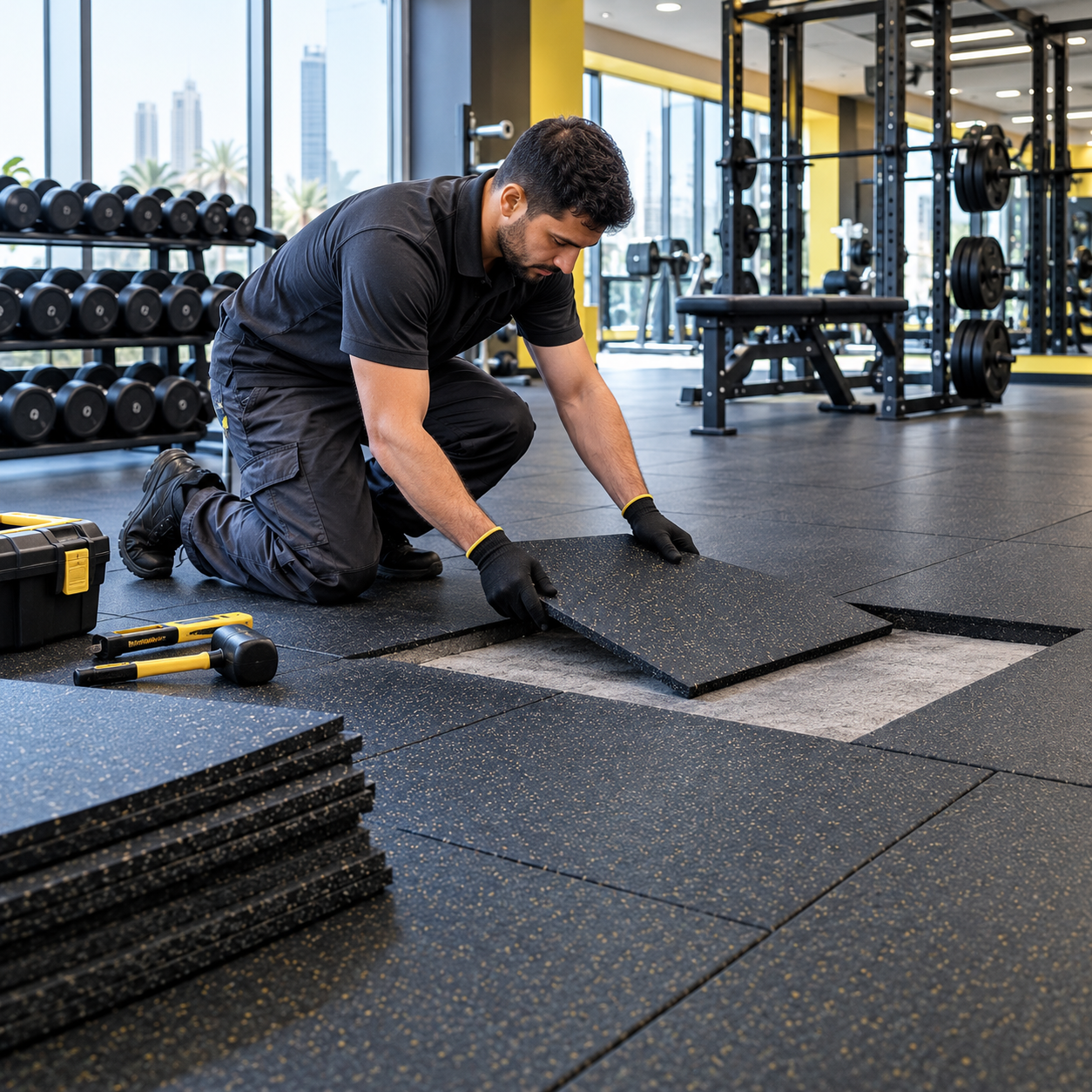
The dominant gym floor material in UAE facilities 15–20mm interlocking rubber tiles in free weight areas and functional zones; 8–10mm rolled rubber in cardio zones. Durable, impact-absorbing and slip-resistant when maintained. UAE-specific challenge: hardens and cracks at seams in high-ambient-temperature environments; sand and dust embed in the porous surface and act as abrasives.
Artificial Grass / Synthetic Turf
Used in functional training lanes, sled tracks and HIIT zones. Popular in UAE hotel gyms and boutique fitness studios. Accumulates dust, sweat and debris rapidly in UAE conditions. Without regular brushing and vacuuming, fibres compact and the surface becomes slippery and odorous a significant hygiene and safety issue. Infill material (crumb rubber or sand) requires periodic top-up.
Hardwood Sprung Floors
Found in group fitness studios, dance and yoga spaces within hotel spas and premium health clubs. A premium UAE gym amenity but the most moisture-sensitive floor type in the facility. UAE air conditioning cycling causes repeated humidity changes that cup and gap hardwood boards without correct humidity control and maintenance. Requires specialist hardwood care products never wet-mop a hardwood gym floor with a standard multi-purpose cleaner.
Commercial Vinyl / LVT
Luxury Vinyl Tile (LVT) or commercial sheet vinyl in reception areas, stretching zones and lighter-use cardio spaces. Easy to clean but vulnerable to point-load damage from dropped weights and heavy equipment feet if protective underlays are not in place. UAE hard water used in mopping leaves mineral film on vinyl surfaces that dulls the finish and reduces slip resistance — a specific UAE maintenance issue.
Foam Tiles and EVA Mats
Used in stretching areas, children’s zones and martial arts spaces. Low cost but highest maintenance frequency foam absorbs sweat and body residue, and provides a substrate for mold and bacterial growth in UAE’s humidity if not cleaned and dried between sessions. UAE ambient heat accelerates the compression and brittleness of EVA foam foam tiles in UAE gyms typically need replacement every 18–24 months rather than 3–5 years in temperate markets.
Epoxy Resin Coated Concrete
Common in CrossFit boxes, warehouse gyms and building roof-deck gym installations in the UAE. Seamless, non-porous surface that is easy to clean but susceptible to impact chipping from dropped barbells and kettlebells. UAE hard water leaves calcium deposits on epoxy surfaces. Requires anti-slip additive maintenance the surface aggregate that provides grip is worn down by heavy traffic and needs periodic recoating to maintain Dubai Municipality non-slip compliance.
Gym Flooring Maintenance by Floor Type — UAE-Specific Product and Method Guide
Rubber Gym Floor Maintenance — the Foundation of UAE Gym Floor Care
Rubber tiles and rolls account for 70–80% of flooring in UAE commercial gyms. Daily maintenance: dry mop or vacuum to remove sand and grit before it embeds and abrades the rubber surface this is the most important daily task and the one most often skipped. Weekly maintenance: wet clean with a pH-neutral cleaner diluted in water (avoid acidic or alkaline cleaners they degrade rubber compounds). Never use bleach on rubber flooring: it accelerates surface cracking and discolouration within months. For odour control in UAE’s warm environment, use an enzyme-based gym floor cleaner weekly enzymes break down the organic compounds from sweat that cause odour rather than simply masking them. Quarterly: inspect all seam lines and interlocking tile joints for lifting, cracking or separation these are trip hazards and Dubai Municipality inspection failure points. Apply a rubber conditioner/protector annually to offset UAE heat-induced hardening.
Artificial Turf Maintenance — Daily Brushing is Non-Negotiable in UAE Conditions
Artificial turf in UAE gym environments accumulates sweat, dust and sand at a significantly higher rate than in temperate markets. Without daily brushing against the grain of the fibres to lift them upright, UAE gym turf compacts within weeks, losing its cushioning properties and becoming both a slip hazard and an odour source. Use a stiff-bristle turf rake or a mechanical counter-rotating brush for daily brushing. Weekly: vacuum with a commercial upright vacuum to remove embedded dust and debris. Monthly: apply an anti-bacterial turf treatment to the surface essential in UAE’s warm, humid gym environments where bacterial growth in compressed turf fibres can be rapid. Annually: inspect infill levels and top up with clean sand or crumb rubber as required; check backing for UV degradation in any natural-light gym areas; and arrange a professional hot-water extraction clean.
Hardwood Sprung Floor Maintenance — Humidity Control Is as Important as Cleaning
Hardwood sprung floors in UAE hotel gym studios require a maintenance programme that addresses both cleaning and moisture management. Cleaning: dust mop daily using a microfibre dry mop never a wet mop; damp mop weekly with a hardwood-specific pH-neutral cleaner applied to the mop head, not poured onto the floor; never leave standing water on a hardwood gym floor even briefly. Moisture management: maintain the studio at 45–55% relative humidity year-round UAE air conditioning in summer drives humidity below 30%, which causes hardwood boards to shrink and gap; place humidity monitoring in group fitness studios and adjust AC settings accordingly. Annually: inspect for cupped, raised or damaged boards; arrange professional sanding and refinishing by a specialist hardwood floor contractor never DIY sand a sprung floor without understanding the spring system beneath it.
The primary UAE-specific challenge for vinyl and LVT gym floors is mineral film from 400+ PPM hard water used in routine mopping calcium and magnesium deposits build up with each mop cycle, dulling the surface and, critically, reducing slip resistance. Use distilled or filtered water in mop buckets wherever possible; alternatively, add a diluted citric acid rinse (1:50) as a final mop pass after cleaning to dissolve mineral deposits before they film. Weekly cleaning with a commercial vinyl cleaner removes dirt and surface contamination; quarterly, strip the floor with a non-rinse stripper and reseal with a commercial gym vinyl sealer rated for the facility’s traffic level. Avoid steam cleaning on LVT the heat can soften the adhesive bond of individual tiles and cause lifting at edges.
Gym Floor Damage Zones in UAE Facilities — Where Flooring Fails First
Free Weight and Deadlift Zone
Repeated heavy barbell drops and kettlebell impact create compression fatigue and cracking in rubber tiles. UAE gyms see faster degradation here due to year-round operation. Inspect monthly; replace individual tiles before damage spreads to adjacent tiles — a single cracked tile creates an edge-lift trip hazard across the whole zone.
Treadmill Rows
Continuous vibration from commercial treadmills causes rubber tiles beneath machine feet to compress and depress unevenly, creating equipment instability and edge-lift at tile joints. Rubber underlay beneath treadmills must be inspected quarterly and replaced when compression set exceeds 10% of original thickness typically every 2–3 years in UAE hotel gym treadmill bays.
Functional Training Lane Entry/Exit
The transition between turf and rubber at sled track entry points sees concentrated foot traffic, sled scraping and lateral movement. Transition strips at turf-to-rubber interfaces must be checked monthly — they lift and create trip hazards, particularly in UAE facilities where the temperature differential between the air-conditioned interior and hot equipment metal accelerates adhesive failure at edges.
Cardio Zone Perimeter
The perimeter edge of the cardio zone — where users step on and off machines — concentrates foot traffic on a narrow band of flooring. Rolled rubber at these transition points wears through its surface texture first, creating a smooth band that is a slip hazard in the wet environment of a busy UAE hotel gym. Inspect quarterly and replace perimeter runs as priority maintenance.
Stretching and Yoga Zone
Lower-wear zone but highest hygiene risk direct skin contact with foam or vinyl surfaces during mat-free use makes this area a bacterial transmission point. In UAE hotel gyms where guests may use the floor without a mat, daily disinfection of the stretching zone floor is a DHA and Dubai Municipality hygiene requirement. Foam tile replacement here should be proactive schedule bi-annual foam tile replacement as a planned cost rather than waiting for visible degradation.
Equipment Storage Areas
Dumbbell racks, plate trees and kettlebell storage create concentrated point loads on flooring. The area directly beneath rack feet experiences compression that is invisible until the rack is moved — find depressions, adhesive failure or cracked tiles here during quarterly deep inspections. Use load-spreading plates beneath heavy storage equipment if the original flooring specification did not account for static point loads.
Gym Flooring Maintenance — Frequently Asked Questions
Gym flooring in UAE facilities should be cleaned daily at minimum — this means dry mopping or vacuuming to remove sand and grit before it embeds in rubber pores and acts as an abrasive, plus spot-cleaning of visible soiling throughout the operating day. A full wet clean should be performed after the last session of each day or before the facility opens, using the correct product for each floor type. In UAE conditions — year-round operation, high ambient heat, significant sand and dust ingress and no seasonal closure — standard European or North American maintenance intervals (weekly for rubber, monthly for deep clean) are insufficient. UAE hotel gyms and commercial fitness facilities operating 16+ hours daily should treat daily cleaning as non-negotiable and weekly deep cleaning as the minimum for Dubai Municipality compliance. High-traffic areas such as free weight zones and treadmill bays benefit from an additional mid-session spot-clean during peak operating hours.
The best cleaner for rubber gym flooring in UAE is a pH-neutral enzyme-based gym floor cleaner diluted according to the product label and applied with a clean microfibre mop. Enzyme-based cleaners are specifically effective in UAE conditions because they break down the organic compounds from sweat and body residue that accumulate in the porous rubber surface and cause odour — rather than simply masking odour with fragrance or disinfecting the surface without addressing the organic load. For periodic disinfection, use a quaternary ammonium compound (quat) based disinfectant formulated for rubber surfaces — not bleach, which is the most damaging product commonly applied to rubber gym flooring in UAE facilities and causes oxidation, surface cracking and discolouration within months. Popular UAE gym floor cleaning products include: Diversey Suma gym floor cleaner; concentrated gym floor enzyme cleaners available from UAE FM supply distributors; and brand-specific cleaners supplied by major rubber flooring manufacturers such as Ecore, Pavigym and Rubbercal. Use RO-filtered or demineralised water in mop buckets to prevent UAE hard water mineral film on rubber surfaces.