Hammam Black Soap and Cleaning Products: What Is Safe for Natural Stone?
Hammam cleaning products can protect your marble for decades or damage it in a single wash, and the difference often comes down to one label. A Moroccan bath is built from beautiful but sensitive materials such as marble, limestone, travertine and tadelakt, and the wrong cleaner can leave dull patches, rough surfaces and permanent marks. This guide explains which hammam cleaning products are safe for natural stone, where black soap fits in, and which popular household cleaners you should never use. You can also browse our premium wellness solutions to see how a well-finished hammam is designed to last.
Why Hammam Cleaning Products Matter for Natural Stone
Natural stone is porous. Marble, limestone and travertine are made largely of calcium carbonate, which reacts badly to acids. Every day, your hammam faces hot steam, soap, body oils, minerals from UAE hard water and, in summer, high humidity. Together these leave a film that needs regular cleaning, so choosing the right hammam cleaning products is part of your maintenance, not an afterthought.
Using the wrong product can cause:
- Etching: dull, cloudy marks where acid has dissolved the surface
- Stains: oils and dyes sinking into unsealed stone
- Sealer breakdown: harsh chemicals strip protective coatings
- Rough texture: abrasive pads scratch polished or honed finishes
- Slippery floors: soap scum builds up when products are not rinsed away
The Hidden Cost of Choosing the Wrong Cleaner
Repairing etched marble usually means professional polishing or honing, which costs far more than a bottle of the right cleaner. Prevention is cheaper and keeps your hammam looking its best.
Is Black Soap Safe for Hammam Surfaces?
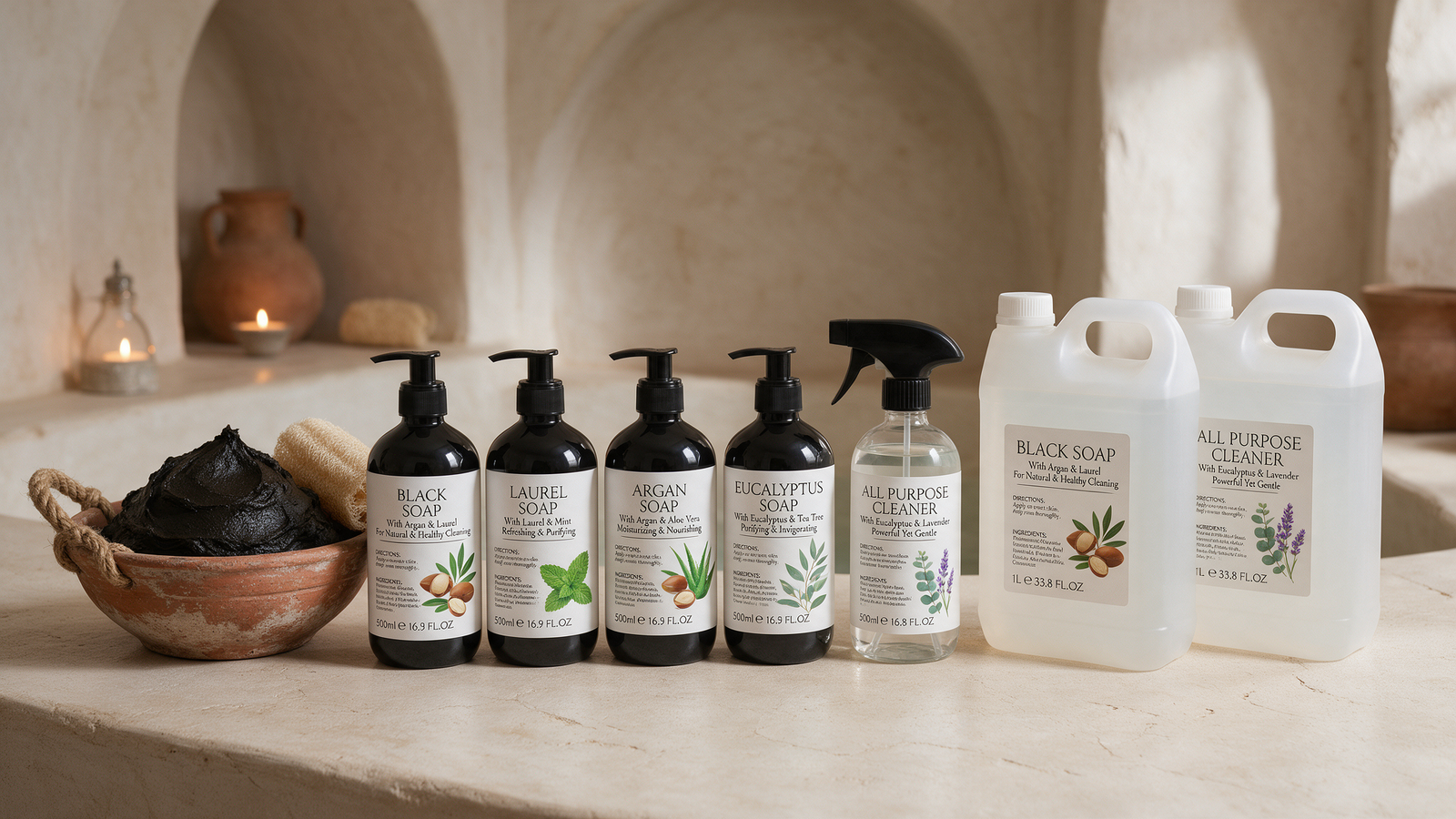
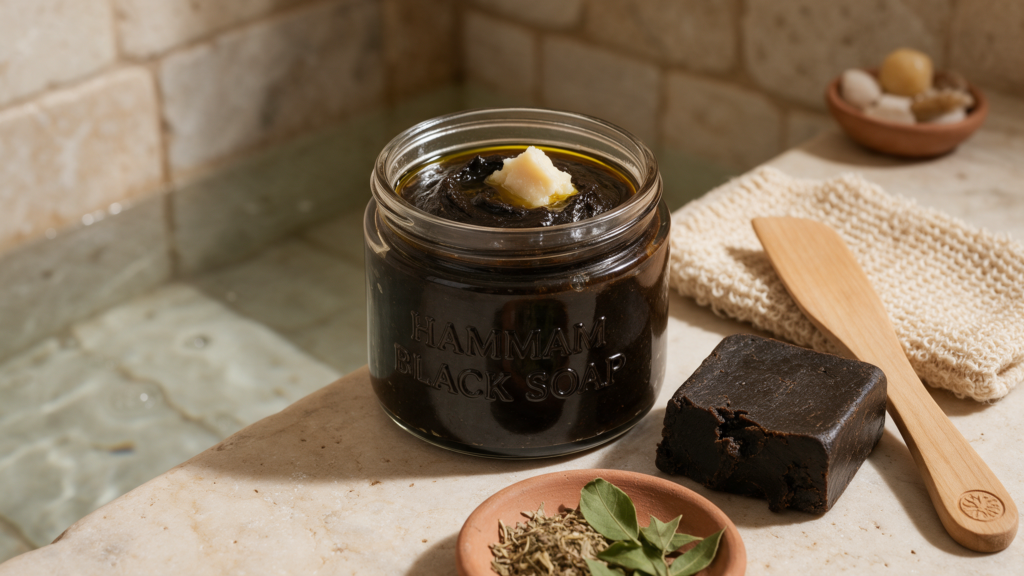
Traditional black soap, often called savon beldi, is made from olives and has been used in Moroccan baths for centuries. People use it on skin before scrubbing with a kessa glove. Many owners also wonder if it works as one of their hammam cleaning products for surfaces.
The honest answer is that it depends on the surface and on how you use it.
Black Soap on Marble, Limestone and Travertine
Black soap is a soft, oil-based soap and is not an acid, so it will not etch stone the way vinegar or lemon will. However, it can leave a greasy film if you do not rinse well, and that film attracts dirt and makes floors slippery. If you use it on stone, dilute it in warm water, apply gently and rinse thoroughly with clean water.
Black Soap on Tadelakt
Tadelakt is a polished lime plaster traditionally finished and sealed with olive oil soap, so gentle soap-based cleaning suits it well. Use a soft cloth and small amounts, avoid scrubbing hard and never use abrasive pads. If you are unsure about your finish, ask the installer who applied it.
A Practical Rule for Black Soap
Use black soap for the body and the occasional gentle surface wipe-down, but rely on a dedicated pH-neutral stone cleaner for regular floor and wall cleaning.
Safe Hammam Cleaning Products for Natural Stone
The best hammam cleaning products share three qualities: they are gentle, they rinse clean and they are made for the stone you own.
pH-Neutral Stone Cleaners
A pH-neutral cleaner, labelled safe for marble, limestone or natural stone, is the safest daily option. It lifts soap and body oil without attacking the surface or the sealer.
Mild Liquid Soap and Warm Water
For light cleaning, a few drops of mild, fragrance-free liquid soap in warm water often does the job. Rinse well and dry the surface afterwards.
Stone Poultices for Stains
For stubborn oil or organic stains, a stone poultice draws the stain out of the pores. Follow the product instructions carefully and test it first, because stains from deeper layers may need a professional.
Microfibre Cloths and Soft Brushes
The right tools matter as much as the product. Choose microfibre cloths, soft nylon brushes and a rubber squeegee. They clean effectively without scratching.
Penetrating Sealers
Sealers are not cleaners, but they make cleaning easier by reducing absorption. Ask your installer which sealer suits your stone, and how often to renew it in the UAE climate.
Hammam Cleaning Products to Avoid on Natural Stone
Some of the most popular household cleaners are the most damaging. Avoid these on marble, limestone and travertine:
- Vinegar and lemon juice: acids etch calcium-based stone quickly
- Limescale removers: most contain strong acids that dull the finish
- Bleach: can discolour stone and damage seals and grout
- Ammonia-based glass cleaners: can leave residue and harm sealers
- Abrasive powders and steel wool: scratch polished surfaces
- Oil-based polishes and strong fragranced oils: can stain and leave slippery films
Safety warning: never mix bleach with ammonia or other cleaning chemicals, because the fumes are dangerous, especially in a closed, steamy room.
Quick Guide: Which Hammam Cleaning Products Suit Which Surface?
| Surface | Safe Choices | Avoid |
|---|---|---|
| Marble | pH-neutral stone cleaner, mild soap | Vinegar, lemon, limescale remover |
| Limestone / travertine | pH-neutral cleaner, soft brush | Acids, abrasive pads |
| Tadelakt | Diluted mild soap, soft cloth | Hard scrubbing, harsh chemicals |
| Granite | pH-neutral cleaner | Strong acids and bleach on sealed stone |
| Glass | Squeegee, mild glass cleaner | Abrasive pads |
| Grout and silicone | Mild soap, soft brush | Bleach and harsh scrubbing |
Always check your supplier’s care guidance, because finishes differ.
How to Clean Your Hammam Step by Step
Follow this routine with your chosen hammam cleaning products:
- Ventilate the room. Run your extraction fan and open the door so steam clears.
- Rinse first. Wash down surfaces with warm water to remove loose soap and oil.
- Apply the cleaner. Use a pH-neutral stone cleaner or diluted mild soap as directed.
- Agitate gently. Use a soft brush or microfibre cloth, working in small sections.
- Rinse thoroughly. Leftover product creates film and slippery floors.
- Squeegee and dry. Remove water from walls, benches and floors, then let the room air out.
Test Before You Commit
Try any new product on a small hidden area first. Wait for it to dry and check for dull spots, colour change or stickiness before you clean the whole room.
UAE-Specific Tips: Hard Water, Humidity and Summer
Hard water leaves white mineral marks on stone, glass and taps. In the UAE, fast squeegeeing after each session helps, because water that dries on the surface leaves the minerals behind. Humid summers slow drying, so good airflow is essential, and strong ventilation protects every cleaning effort you make. Our guide to hammam ventilation upgrades explains how to keep moisture under control. If limescale does build up, ask a stone specialist for a product made for natural stone rather than reaching for a standard descaler.
5 Costly Mistakes That Ruin Natural Stone in a Hammam
- Using acidic cleaners. One wash with the wrong product can leave permanent marks.
- Skipping the rinse. Residue creates slippery floors and a dull film.
- Over-scrubbing. Hard brushes and abrasive pads scratch polished stone.
- Neglecting sealer. Unsealed stone absorbs oil and stains quickly.
- Mixing products. Combining cleaners can damage surfaces and create dangerous fumes.
When to Call a Professional
Bring in a stone specialist if you see deep etching, stubborn stains, loose or crumbling grout, cracked tadelakt or recurring damp. Repairs are cheaper when problems are caught early. Our hammam experts in the UAE can assess your surfaces and recommend the right care routine.
Final Thoughts: Choose Hammam Cleaning Products Wisely
The best hammam cleaning products are gentle, pH-neutral and easy to rinse. Black soap has a place in the hammam, but it should not replace a proper stone cleaner. Avoid acids, bleach and abrasives, test products first, and keep your hammam well ventilated and dry. With the right approach, your natural stone will stay smooth, bright and beautiful for years.
Frequently Asked Questions
You can use a small amount, diluted in warm water, for gentle cleaning. It is not an acid, but it can leave a greasy film, so rinse thoroughly or use a pH-neutral stone cleaner for regular floor care.
No, not on marble, limestone or travertine. Vinegar is acidic and can etch these stones, leaving dull marks that are hard to remove.
A pH-neutral cleaner labelled safe for natural stone, used with warm water and a soft cloth, is the safest daily choice. Check that it suits your specific stone.
Squeegee surfaces after each session to prevent buildup. For existing marks, use a product made for natural stone or ask a specialist, because standard descalers are usually acidic.
Rinse and squeegee after each session, do a proper clean with stone-safe products weekly, and inspect seals, sealer and grout every season.
Get Your Hammam Care Advice or Quote Today
Not sure which hammam cleaning products suit your marble or tadelakt? Our team can inspect your hammam, recommend the right care routine and help you protect your investment through the UAE summer.
Contact us today to:
- Get a free, no-obligation quote
- Book a hammam inspection
- Get advice on stone-safe cleaning and sealing
Get a free quote, explore our hammam range or visit our homepage to learn more.