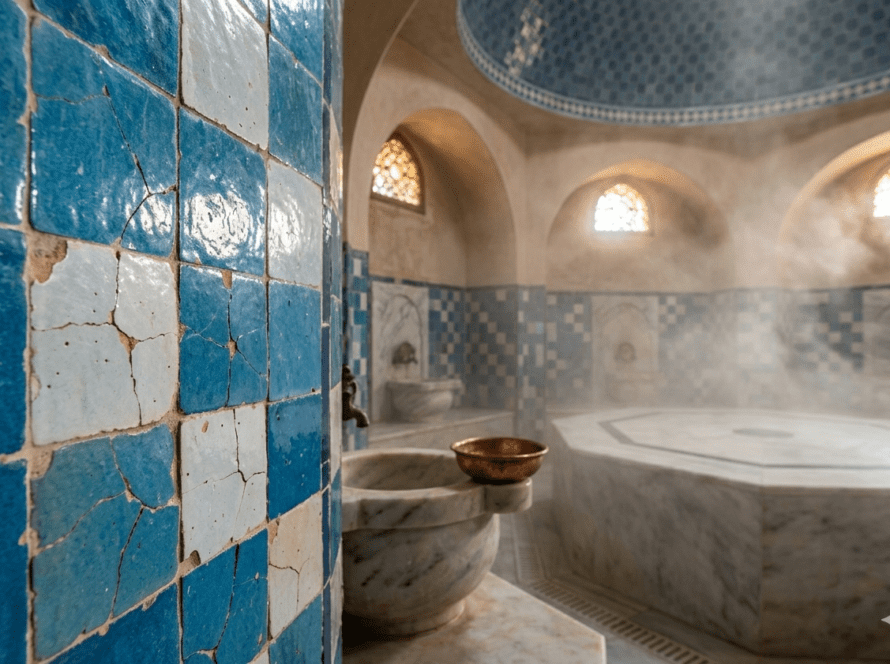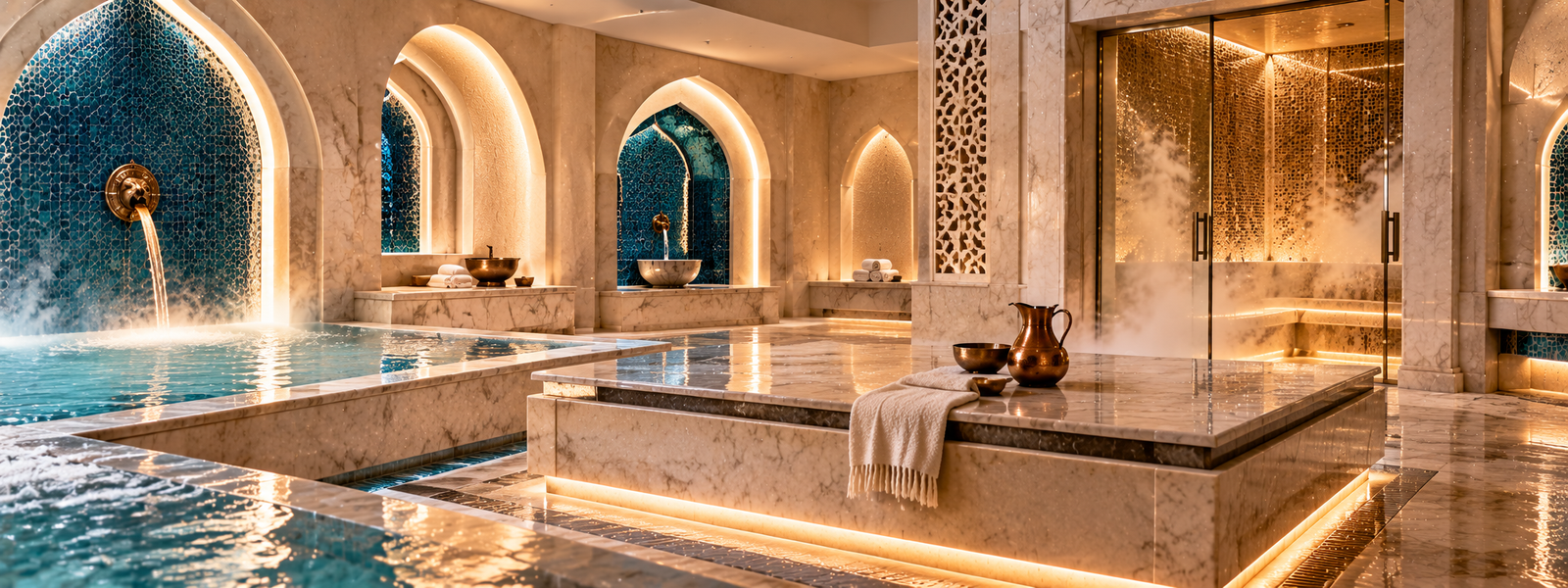
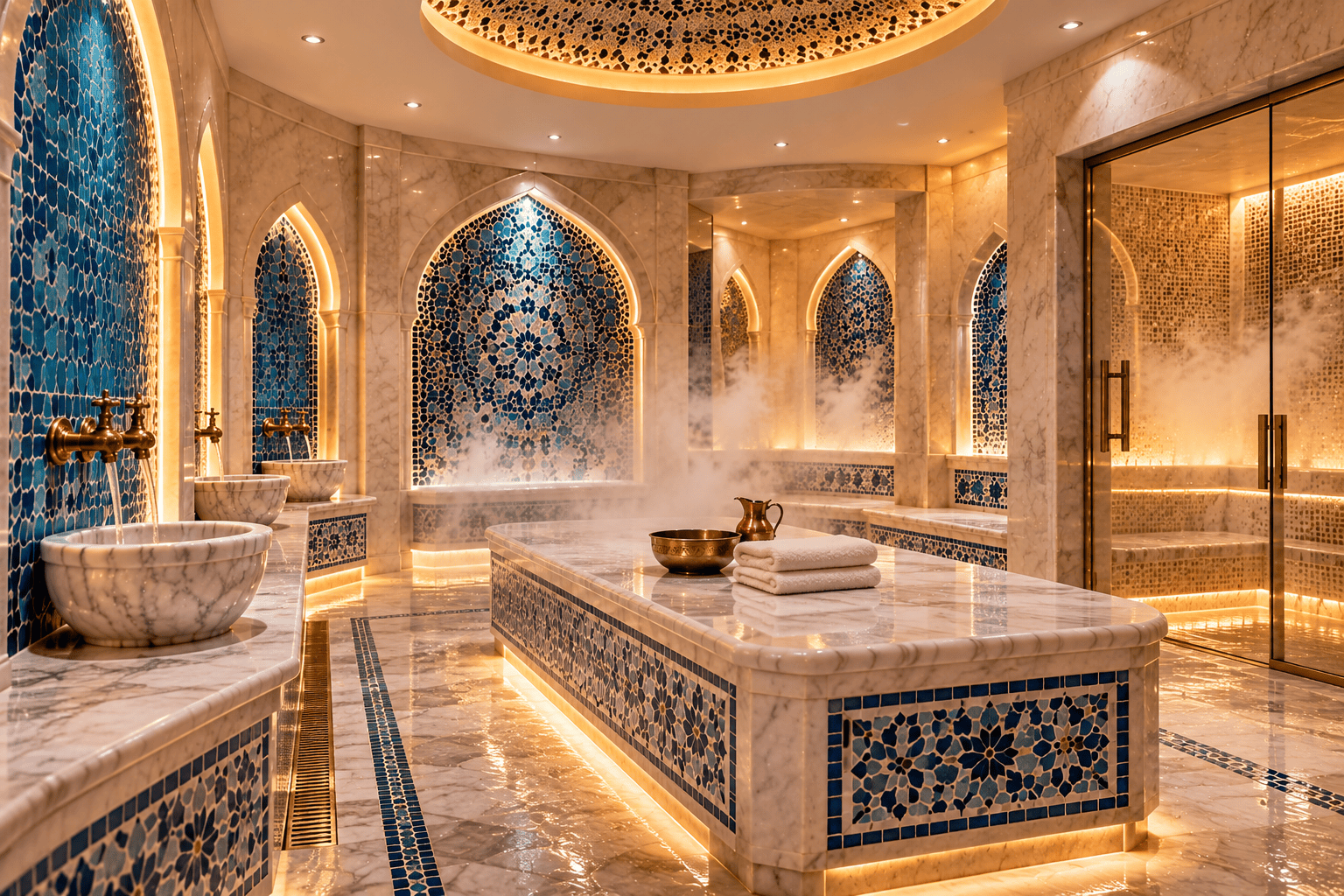
How to Maintain a Commercial Hammam in a Dubai Hotel
A commercial hammam in a Dubai hotel spa is one of the most operationally complex wellness assets a property can own — combining high-humidity tiled environments, pressurised steam systems, specialised plumbing, delicate stone surfaces and daily guest contact. This guide gives hotel spa managers, chief engineers and facility teams the complete 2026 maintenance framework to keep their hammam operational, compliant and guest-ready.
Maintaining a commercial hammam in a Dubai hotel requires a structured four-tier schedule: daily — deep clean all surfaces, inspect drains and grouting, check steam generator pressure and water feed, verify temperature controls, sanitise towel and product storage; weekly — descale water outlets and steam nozzles, inspect tile grout and silicone seals, test thermostatic mixing valves, flush drainage lines; monthly — full steam generator service, stone surface re-seal check, plumbing pressure test, electrical safety inspection, filter replacement; annually — full plant overhaul, tile and grout restoration, DEWA compliance check, Dubai Municipality licence renewal inspection. Dubai hotel hammams operating in 5-star and luxury resort properties should budget AED 25,000–60,000 per year for comprehensive planned preventive maintenance, depending on hammam size and usage frequency.
Why Commercial Hammam Maintenance in Dubai Is Uniquely Demanding
A Moroccan hammam in a Dubai hotel faces operational stresses that are significantly more intense than the same facility in a European or North American property. The combination of Dubai’s water chemistry, climate, usage intensity and regulatory environment creates a maintenance burden that most standard spa maintenance schedules underestimate.
Dubai’s municipal water is heavily mineral-laden, with high calcium and magnesium content. Every litre of water passing through a hammam’s steam generator, kurna basins and pipe work deposits mineral scale. Without aggressive descaling programmes, steam generators in Dubai hotel hammams will experience significant efficiency loss within 3–6 months and failure within 12–18 months. This is the primary cost driver that distinguishes Dubai hammam maintenance from global norms.
The thermal cycling in a Dubai hotel hammam — from 45–55°C operating temperature to ambient between sessions, repeated multiple times daily — stresses tile adhesives, grout and silicone seals more severely than in stable-climate locations. Grout and silicone failure rates in Dubai hammams are substantially higher than comparable European properties, requiring more frequent inspection and replacement cycles.
Water Treatment Is the Most Underinvested Line in Dubai Hotel Hammam Maintenance
The single highest-impact improvement most Dubai hotel hammams can make to their maintenance programme is installing a dedicated water softener or reverse-osmosis (RO) pre-treatment unit on the hammam’s water supply — specifically the steam generator feed line. The AED 8,000–20,000 capital cost of a properly specified RO or water softener system is typically recovered within 12–18 months through reduced descaling labour costs, extended steam generator service life and reduced emergency breakdown callout costs. Hotels without water pre-treatment on their hammam supply should treat this as the highest maintenance priority.
Daily Hammam Maintenance Checklist for Dubai Hotels
Daily maintenance in a commercial hotel hammam serves two purposes: maintaining guest presentation standards and catching developing faults before they become costly repairs. The following daily tasks should be completed before the hammam opens to guests each morning and at close of operations each evening.
Surface Cleaning and Inspection
- Deep clean all tiled surfaces, heated slab, walls and floor with pH-neutral hammam-specific cleaner
- Inspect grouting lines for cracks, staining or lifting — log any changes since previous day
- Check silicone seal integrity at wall-floor junctions and around all water outlets
- Inspect drain channels and grates — clear any blockages, confirm free water flow
- Wipe down all brass fittings, kurna basin and handheld shower fittings
Steam System Start-Up Check
- Confirm steam generator water level indicator is in normal operating range
- Check operating pressure reading against baseline spec for the installed unit
- Verify steam nozzle outlet is clear — no scale blockage or debris
- Confirm room reaches target operating temperature within the expected pre-heat time
- Test thermostatic mixing valve at each water outlet — confirm maximum temperature setting is holding
During-Session Monitoring
- Room temperature check every 2 hours against set-point — log any variance greater than ±2°C
- Visual inspection of grout and drainage between guest sessions
- Replenish towels, robes and body care products in storage areas adjacent to hammam
- Spot-clean any water pooling outside designated drainage zones
- Check steam generator indicator panel every 2 hours during operating period
Close-Down and Deep Clean
- Full surface clean with anti-bacterial, anti-fungal hammam cleaner — all surfaces including ceiling
- Flush all drain lines with clean water
- Shut down steam generator per manufacturer’s close-down procedure
- Leave hammam door open or ventilation running to allow full air-dry overnight — prevents mould
- Complete daily log including any faults, temperature variances or unusual observations
Weekly Hammam Maintenance Tasks
Monthly Planned Preventive Maintenance for Hotel Hammams in Dubai
Steam Generator Full Service
- Full internal inspection and descale of steam generator tank and element
- Check and replace sacrificial anode if consumption exceeds threshold
- Inspect pressure relief valve — test operation against rated pressure
- Clean or replace water inlet filter/strainer
- Verify and recalibrate operating pressure setting
- Inspect steam delivery pipe run for scale or blockage
Plumbing Pressure and Seal Test
- Pressure test hot and cold supply lines to hammam — confirm no pressure drop
- Inspect all visible pipe joints under hammam for corrosion or weeping
- Test all isolation valves — confirm they operate and close fully
- Check water meter reading against usage log for unexplained consumption indicating a concealed leak
- Inspect any flexible hose connections for age-related cracking
Stone and Tile Surface Assessment
- Test marble and natural stone surfaces for sealer effectiveness — water bead test on all stone panels and slab
- Apply re-seal treatment to any stone surfaces failing the bead test
- Inspect all silicone bead lines — remove and replace any sections showing cracking, discolouration or separation
- Check tile adhesion on walls and floor by light tapping — hollow spots indicate adhesion failure behind tiles
Electrical Safety Inspection
- RCD (residual current device) trip test on all hammam electrical circuits
- Insulation resistance test on steam generator and heated slab circuits
- Inspect all lighting fittings for IP rating integrity — replace any fittings showing moisture ingress
- Test earth continuity on all metalwork and water fittings in the hammam
- Check and log thermostatic controller calibration against independent temperature reference
Annual Hammam Overhaul and Compliance Check — Dubai Hotels
Annual Overhaul Should Be Scheduled During Dubai’s Lowest-Occupancy Period
For most Dubai hotels, the lowest spa occupancy window falls in July–August when outdoor temperatures peak and a significant proportion of the UAE resident population travels abroad. Scheduling the annual hammam overhaul during this window minimises the revenue impact of a temporary hammam closure for major maintenance works. A full annual overhaul typically requires 3–7 days of full hammam closure depending on scope. Plan bookings and guest communication in advance.
Steam Generator Maintenance — The Most Critical System in Your Dubai Hotel Hammam
The steam generator is the heart of a Moroccan hammam and the component that most frequently fails in Dubai hotel spa environments. Understanding the specific stresses that Dubai’s operating environment places on steam generators — and maintaining them accordingly — is the difference between a reliable hammam operation and a frequently-closed, expensive-to-repair asset.
Dubai Hard Water Destroys Under-Maintained Steam Generators Within 18 Months
Steam generators in Dubai hotel hammams without dedicated water pre-treatment (softener or RO system) on their feed supply will accumulate scale on heating elements at a rate of approximately 1 mm per month under moderate usage conditions. At 6 mm of scale accumulation, a heating element’s efficiency drops by over 30%, dramatically increasing energy consumption. At 12–15 mm accumulation — which occurs within 12–18 months in a Dubai hard-water environment — the element overheats and fails. Emergency steam generator replacement in a Dubai hotel hammam costs AED 18,000–45,000 in parts and labour, versus a preventive descaling programme costing AED 2,000–4,000 per year. The business case for preventive maintenance is overwhelming.
| Maintenance Task | Frequency (Dubai Standard) | Consequence If Skipped | Approx. Cost (AED) |
|---|---|---|---|
| Steam generator descale (element + tank) | Monthly | Element failure within 12–18 months; 30–50% efficiency loss | 350–600 per service |
| Sacrificial anode inspection and replacement | Every 3–6 months | Tank corrosion and perforation; full unit replacement required | 200–500 per replacement |
| Pressure relief valve test | Monthly | Valve failure — pressure build-up risk; insurance and safety liability | Included in PPM service |
| Water inlet strainer clean/replace | Monthly | Restricted water supply; generator runs dry; element burn-out | Included in PPM service |
| RO / water softener service | Every 3–6 months | Pre-treatment fails; scale accumulation resumes at full hard-water rate | 400–800 per service |
| Full generator replacement or refurbishment | Every 4–7 years | Continued repair costs exceed replacement value; reliability deteriorates | 18,000–45,000 replacement |
Common Commercial Hammam Faults in Dubai Hotels — and How to Fix Them
Steam generator not producing steam
Causes: blocked steam outlet (scale), low water level, failed heating element, tripped thermal cutout, failed pressure relief valve.
→ Isolate unit; check water supply and element continuity; call specialist if element failure suspectedWater outlet delivering above 45°C
TMV failure — the thermostatic mixing valve has drifted or failed, allowing full hot water temperature through to the outlet. Scalding risk to guests.
→ Close hammam immediately; isolate hot supply; replace or recalibrate TMV before reopeningTiles lifting or hollow sounding
Tile adhesion failure — typically caused by moisture tracking behind tiles through failed grout or silicone, combined with thermal expansion cycling.
→ Mark affected tiles; close affected area; commission specialist tile remediation to prevent progressive lossHammam room not reaching target temperature
Causes: steam generator scale build-up reducing output, steam pipe blockage, insulation degradation, door seal failure, ventilation imbalance.
→ Check steam output at nozzle; inspect door seals; commission full steam system servicePersistent drain odour
Organic accumulation in drain lines or a failed drain trap — a trap that has dried out under periods of low use allows sewer gas ingress into the hammam space.
→ Pour water into all floor drains; treat drain lines with enzymatic cleaner; commission CCTV drain survey if persistentMould or black spotting on grout or silicone
Inadequate air exchange after sessions — the hammam is not drying out fully overnight. Also indicates inadequate ventilation system performance.
→ Treat with anti-fungal cleaner; increase post-close ventilation run time; check ventilation airflow ratesWhite scaling on marble or zellige surfaces
Hard water mineral deposition — calcium carbonate scale depositing on wet surfaces in Dubai’s high-TDS water environment.
→ Remove with hammam-safe citric acid solution; consider installing water softener for supply lineBrass fittings tarnishing or corroding
Accelerated by Dubai humidity levels and chlorinated municipal water. Affects kurna basin outlets, handheld shower heads and wall-mounted fittings.
→ Polish with brass-specific cleaner; apply protective wax treatment; review cleaning product compatibilityTile, Grout and Stone Surface Care in Dubai’s Hammam Environment
Wrong Cleaning Products Are a Leading Cause of Hammam Surface Deterioration in Dubai Hotels
Many Dubai hotel housekeeping teams use standard bathroom tile cleaners or general-purpose disinfectants on hammam surfaces — products that are incompatible with the natural stone (marble, limestone, onyx), traditional zellige and specialised grouts used in Moroccan hammam construction. Acidic cleaners (vinegar-based, citric-acid general cleaners, scale removers not formulated for stone) etch marble surfaces irreversibly over weeks of daily use. High-pH alkaline cleaners break down epoxy grout sealer over time, allowing moisture penetration. Specify hammam-specific, pH-neutral stone-safe cleaning products for daily use, and train all housekeeping staff in their correct application.
| Surface Type | Safe Daily Cleaner | Avoid | Reseal Frequency (Dubai) |
|---|---|---|---|
| White/cream marble (heated slab, walls) | pH-neutral stone cleaner (pH 7–7.5) | Vinegar, citric acid, bleach, acidic descaler | Every 3–4 months |
| Zellige / Moroccan mosaic tile | Mild neutral tile cleaner, soft cloth | Abrasive pads, strong alkalis | Glaze — no sealer required |
| Honed limestone or travertine | pH-neutral stone cleaner | Any acid-based product, citrus cleaners | Every 2–3 months |
| Epoxy grout lines | Neutral tile and grout cleaner | Strong bleach, undiluted acid | No sealer required — inspect monthly |
| Standard cement grout lines | pH-neutral tile cleaner | Any acid, bleach at full strength | Seal every 2–3 months (if not replacing with epoxy) |
| Brass and copper fittings | Mild soapy water, brass-specific cleaner | Bleach, acid cleaners, abrasive scrubbers | Polish and wax quarterly |
Dubai Municipality and Regulatory Compliance for Hotel Hammams
Commercial hammam operations in Dubai hotels are subject to oversight from multiple regulatory bodies. Understanding which authority governs which aspect of hammam operations, and what compliance evidence each requires, is essential for hotel spa managers and chief engineers responsible for the facility.
| Authority | Compliance Area | Documentation Required | Renewal Frequency |
|---|---|---|---|
| Dubai Municipality (DM) | Spa facility licence, hygiene standards, facility condition | DM spa operating licence, facility inspection report, hygiene log | Annual licence renewal; inspections as scheduled |
| DEWA (MEP registration) | All electrical and plumbing works on steam generator, heated slab, water supply | DEWA-registered MEP contractor completion certificate for all works; NOC for major modifications | Required for every maintenance task involving electrical or plumbing systems |
| Dubai Tourism (DTCM) | Hotel spa classification and guest safety standards | Hotel classification certificate; spa operations compliance with DTCM hotel standards | Annual hotel classification review |
| Dubai Health Authority (DHA) | Medical wellness facilities, spa therapist qualifications | DHA practitioner licences for any wellness therapists; facility hygiene log for DHA-regulated services | Per practitioner — annual renewal |
| Dubai Civil Defence | Fire safety in spa and wellness areas including hammam | Annual fire safety inspection certificate; fire suppression system test records for the spa area | Annual civil defence certificate |
Maintain a Hammam Maintenance Log That Can Be Produced for DM Inspection
Dubai Municipality spa inspectors reviewing a hotel hammam will commonly request maintenance logs as evidence of proper facility management. A well-maintained hammam log — recording daily cleaning sign-off, weekly task completion, monthly PPM records, contractor visit reports and any fault/repair events — demonstrates to inspectors that the facility is actively and properly managed. Digital maintenance management systems (CAFM systems) used by many Dubai hotels can generate this log automatically from work order records. Gaps in the maintenance log — particularly for daily hygiene tasks — are a common source of DM inspection findings in hotel spa facilities.